
Managing high blood pressure during pregnancy involves regular monitoring, careful medication reviews, and consistent routines. Learn what to discuss with your healthcare provider and how DosePacker’s solutions can help.
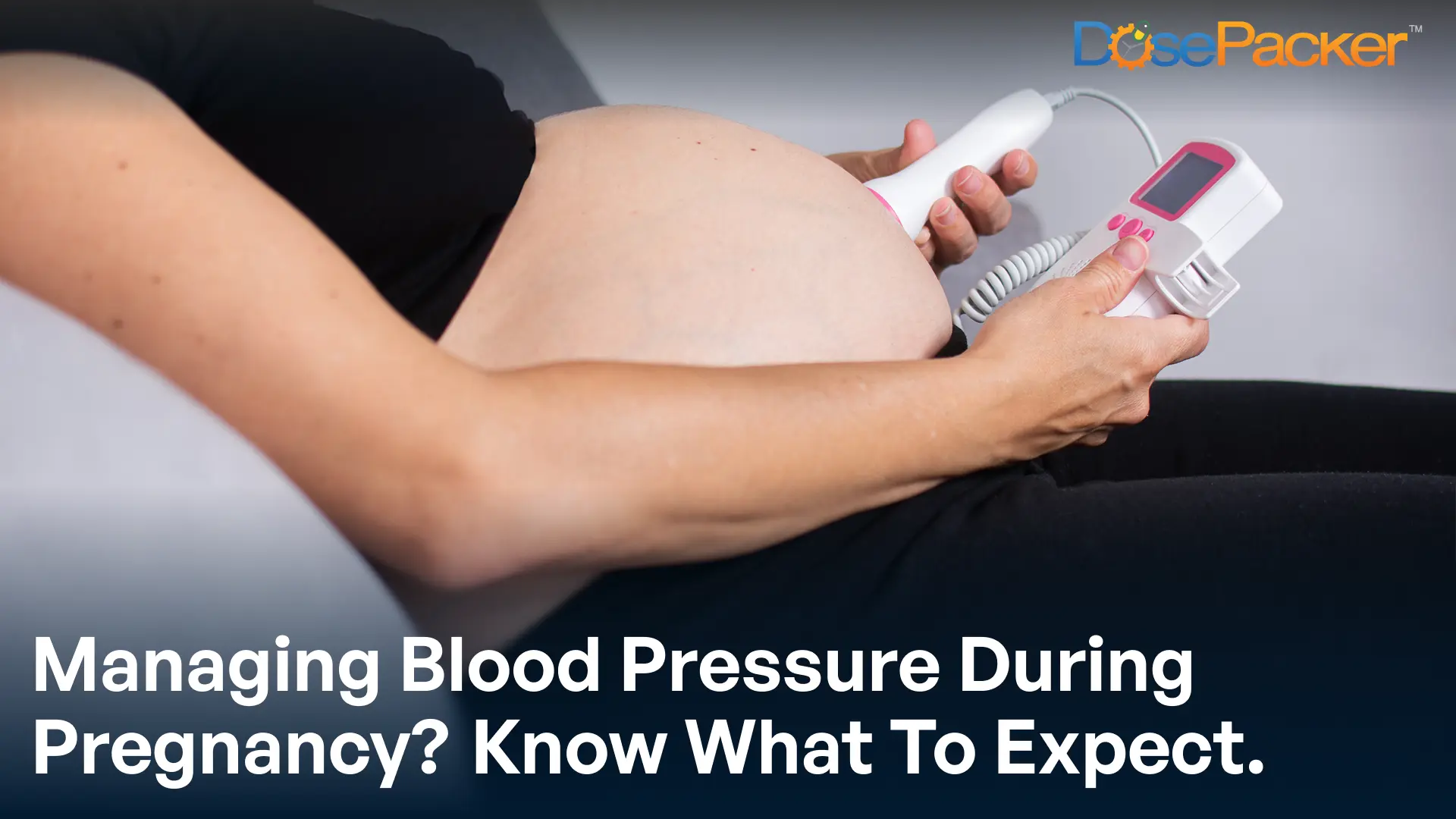
A pregnancy diagnosis can change the way someone thinks about their daily medications. A prescription that was once part of an ordinary morning routine may now raise questions about safety, dosage, monitoring, and whether the treatment plan needs to change.
These questions are important. According to a study, chronic hypertension during pregnancy in the United States more than doubled between 2008 and 2021, increasing from 1.8% to 3.7% of pregnancies in the study. Among pregnant people with chronic hypertension, only about 60% received antihypertensive medication in 2021. The findings highlight the importance of identifying high blood pressure and ensuring appropriate treatment during pregnancy.
For someone managing high blood pressure, the next steps often involve regular appointments, home blood pressure checks, medication reviews, and a daily schedule that may change as pregnancy progresses. Following the prescribed regimen consistently becomes an important part of that process.
This guide explains the importance of medication management during pregnancy, why medication routines can become challenging, and how DosePacker can help organize established schedules with compliance packaging, tracking, and reminder technology.
A Clearer Routine Starts With the Right Support
High blood pressure during pregnancy requires appropriate medical evaluation because it can affect both the pregnant person and the developing baby. Depending on when hypertension develops, a healthcare provider may identify chronic hypertension, gestational hypertension, or preeclampsia.
Chronic hypertension is present before pregnancy or develops during the first 20 weeks. Gestational hypertension generally develops after 20 weeks without the other defining features of preeclampsia. Preeclampsia is a more complex condition that can involve high blood pressure and signs of organ dysfunction.
These conditions require individualized assessment and monitoring. High blood pressure can increase the risk of complications such as preterm birth, placental abruption, and problems affecting the pregnant person's organs. Appropriate treatment and regular prenatal care help healthcare professionals monitor these risks.
Pregnancy affects circulation, blood volume, and the body's cardiovascular demands. Blood pressure can change as pregnancy progresses, so a treatment plan that was appropriate before conception may need to be reviewed.
A healthcare provider may recommend continuing an existing prescription, adjusting its dose, or changing to a different medication based on the person's health history and pregnancy needs. This is particularly important for people who were already taking blood pressure medication before becoming pregnant.
The CDC's guidance on high blood pressure during pregnancy emphasizes discussing medications with a healthcare provider and not starting or stopping medication without medical guidance.
For anyone navigating blood pressure medication and pregnancy, the priority is to establish an appropriate treatment plan with the prescribing clinician and follow the instructions provided.
Not every blood pressure medication is appropriate during pregnancy. Clinicians consider the medication's safety profile, the severity of hypertension, other health conditions, and the individual's response to treatment.
Labetalol and extended-release nifedipine are commonly recommended options when medication is needed for hypertension during pregnancy. Other treatments may be appropriate in specific circumstances. Some medications, including ACE inhibitors and angiotensin receptor blockers (ARBs), are generally avoided during pregnancy because of potential fetal harm.
This is why high blood pressure pregnancy medication decisions should always be made with a qualified healthcare professional. A medication that was prescribed before pregnancy should not automatically be assumed to remain appropriate, but it should not be discontinued without professional advice either.
The goal is to maintain blood pressure control with a treatment plan selected for the individual's circumstances.
Once the healthcare team establishes a treatment plan, the practical challenge is following it consistently. A person may need to take prenatal vitamins during pregnancy, monitor readings at home, attend appointments, and track other prescriptions or supplements.
The routine can become more complicated when medication instructions change, or multiple doses are scheduled throughout the day. Fatigue, nausea, shifting sleep patterns, and busy appointment schedules can also make it harder to remember whether you've taken a dose.
Effective pregnancy blood pressure medication management therefore involves more than having the prescription available. It also means understanding the instructions, keeping an accurate medication list, and having a reliable way to follow the established schedule.
A complete medication list gives healthcare providers a clearer picture of the treatment regimen. It should include prescription medications, over-the-counter products, vitamins, supplements, doses, and relevant administration instructions.
This list becomes especially important when different clinicians are involved in care.
Keeping the list current also makes appointments more productive. If a prescription changes, record the updated instructions and share them with the relevant members of the healthcare team.
For additional guidance on maintaining an organized routine, these medication safety tips can help reinforce practical habits around prescribed medication use.
A missed dose can create uncertainty, especially when the medication is intended to control high blood pressure. The correct response depends on the specific medication and its prescribed instructions.
Instead of doubling a dose, changing the schedule, or stopping treatment on your own, contact the prescribing clinician or pharmacist for guidance. Keep the medication's written instructions accessible so you can check them when questions arise.
A record of scheduled and completed doses may also help a person explain what happened when speaking with a healthcare professional.
Medication routines and home blood pressure monitoring serve different purposes, but both can contribute to an effective care plan. A healthcare provider may ask someone to record readings at specific times, note symptoms, or report measurements that fall outside an individualized range.
Keeping these records organized makes it easier to discuss patterns during appointments. However, a medication tracking tool cannot determine whether a treatment is working or replace clinical evaluation.
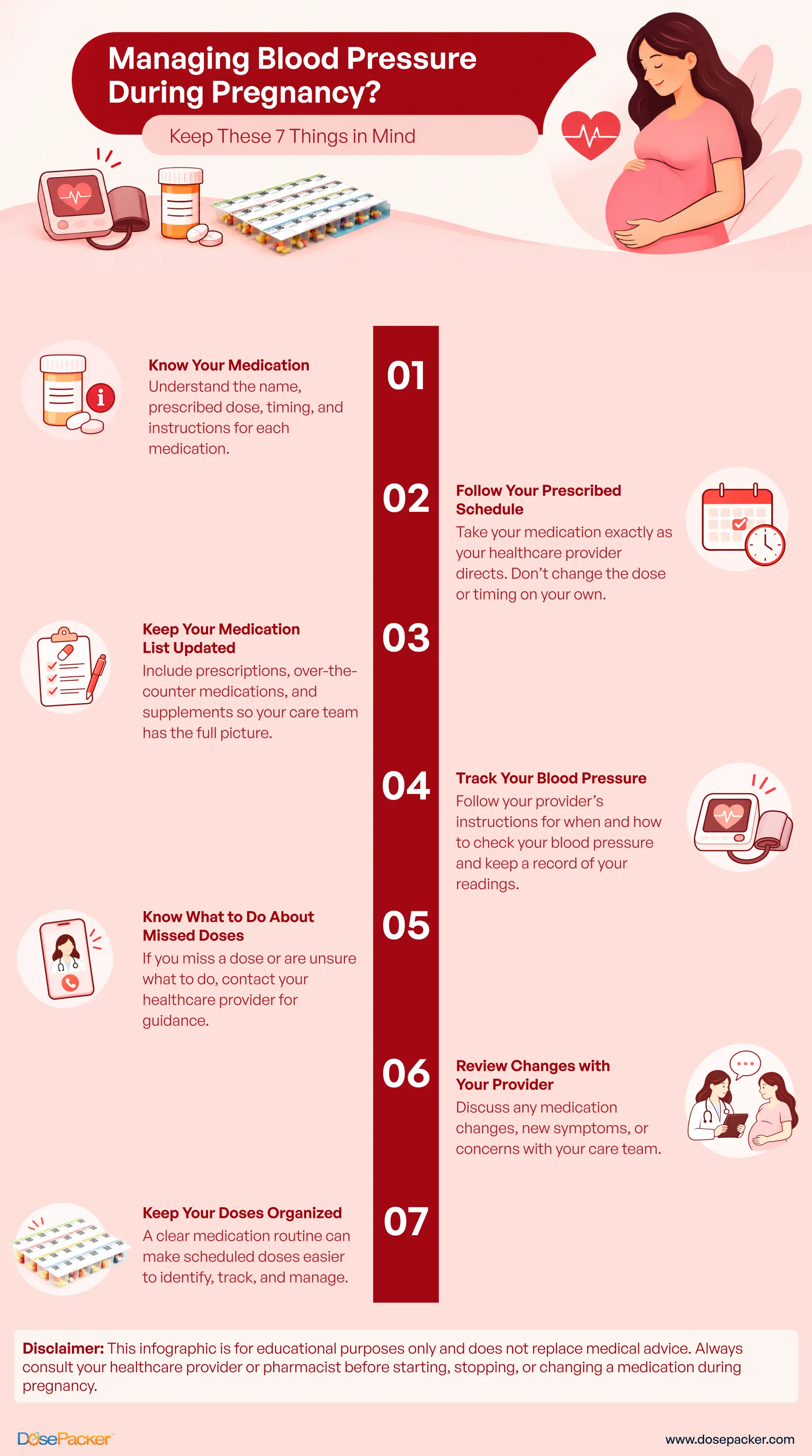
After your healthcare provider confirms the medication regimen, the next step is finding a practical way to organize and follow it. DosePacker offers medication packaging, digital tracking, and reminder solutions designed to support established medication schedules.
These tools may be helpful for people who manage multiple prescriptions and want a clearer view of their daily routine. The right solution depends on the individual's needs and whether the selected packaging or dispensing system can accommodate the prescribed medication.
DosePacker's compliance packaging organizes medications into individual doses according to an established administration schedule. DosePacks can display identifying information such as the patient's name or ID, medication information, dosage, scheduled time, and pill image.
This format helps users identify a scheduled dose without sorting through multiple medication bottles each time. For people managing blood pressure medication alongside other prescribed treatments, organizing doses in advance can make the routine easier to navigate.
DosePacker's MyDoses app connects to supported DosePack workflows via QR code and provides medication tracking, reminders, and documentation.
For someone managing a changing pregnancy medication schedule, digital records can complement physical packaging by making scheduled-dose information easier to access. Reminders may also help reinforce a consistent routine when daily responsibilities compete for attention.
These features support adherence to the established schedule. Any change in dose, timing, or medication should still come from the healthcare provider or pharmacist.
For individuals who need more help with their medication routine, DoseMinder is a connected dispensing system that provides medication reminders and alerts when a dose is due.
This support may help when remembering scheduled doses is difficult. Its value lies in helping users follow their existing medication plan, rather than making treatment decisions or monitoring blood pressure independently.
People considering this option can take control of medications with DoseMinder by exploring whether its features fit their prescribed regimen and daily needs.
Medication organization works best when it supports an informed treatment plan. Regular conversations with the healthcare team help ensure that the regimen reflects changing health needs throughout pregnancy and after delivery.
Before or during pregnancy, discuss existing prescriptions, supplements, side effects, and any difficulty following the schedule. When a new medication is prescribed, knowing the questions to ask about new medications can also help you understand why it is being recommended, how and when to take it, what to expect, and when to contact your healthcare provider.
Also understand which symptoms require immediate attention. Severe-range blood pressure, a persistent severe headache, changes in vision, severe upper abdominal pain, or difficulty breathing can signal a serious complication. Follow your healthcare provider's emergency instructions and seek urgent medical attention when these symptoms occur. Do not rely on a reminder app or routine appointment to address a possible emergency.
Medication needs can change during pregnancy and after delivery. A dose that was appropriate earlier may need reassessment, and postpartum blood pressure problems can occur even after a pregnancy has ended.
Keep the medication list updated after every clinician-directed change. Make sure any packaging, reminder settings, and digital records reflect the current instructions, and confirm discrepancies with the pharmacist before relying on them.
A well-maintained routine should adapt to the approved treatment plan, rather than allowing an old schedule to continue by default.
A few simple habits can make daily medication routines easier to manage. Keep the current medication list accessible, use one consistent method to track scheduled doses, and review any uncertainty with a healthcare professional. If a caregiver helps with the routine, agree on how to document doses and changes to avoid confusion.
For people who need more structured assistance, medication packaging solutions and medication reminder solutions can complement these habits. The right combination depends on the medication regimen, individual preferences, and the support available at home.
Managing high blood pressure during pregnancy requires medical oversight, regular monitoring, and a clear understanding of the prescribed treatment plan. Once that plan is established, practical tools can make it easier to track scheduled doses and keep accurate records.
DosePacker brings together compliance packaging, digital tracking, and reminder technology to support established medication routines. These tools can reduce the day-to-day work of organizing doses while keeping treatment decisions with the healthcare professional.
As medication management continues to evolve, the future of medication management will increasingly involve connected tools that support organization and visibility across daily routines. The essential principle remains the same: technology should complement professional care and help people follow the treatment plan developed for them.
Make Medications One Less Thing to Manage
Explore DosePacker's medication management solutions to learn more about organized packaging, digital tracking, and reminder support.
Medical Disclaimer: This article is for general educational purposes only and is not intended to replace professional medical advice, diagnosis, or treatment. Make medication decisions during pregnancy with a qualified healthcare provider. Never start, stop, change, or adjust a blood pressure medication or supplement based solely on this article. Contact your healthcare provider or pharmacist with questions about your prescribed regimen.
