
Prenatal vitamins support pregnancy nutrition, but taking them consistently can be challenging alongside medications and supplements. Learn how to stay organized with DosePacker.

Pregnancy changes nutritional needs long before most of the visible changes begin. One of the earliest recommendations many women receive is to take a prenatal vitamin, particularly one that provides adequate folic acid.
The reason is well established. According to the CDC, getting 400 micrograms of folic acid every day can help prevent serious birth defects of the baby's brain and spine. The CDC recommends this amount for women who could become pregnant, making folic acid important even before pregnancy is confirmed.
But knowing that a prenatal vitamin matters and remembering to take it every day are two different things.
A prenatal vitamin may become one more item on an already crowded schedule of appointments, meals, prescriptions, and changing routines. For someone who already takes medication, keeping everything organized can become even more important.
This guide covers what you need to know about prenatal vitamins during pregnancy, how they fit into a broader pregnancy medication routine, and how DosePacker can make an established medication schedule easier to organize and follow.
Discover a Clearer Way to Manage Daily Doses
Prenatal vitamins are supplements formulated to help meet the increased nutritional needs associated with pregnancy. They typically contain a combination of vitamins and minerals, although the specific nutrients and amounts can vary from one product to another.
Unlike a standard multivitamin, a prenatal supplement is formulated with pregnancy in mind. Depending on the formulation, it may include folic acid or folate, iron, iodine, vitamin D, vitamin B12, and other nutrients.
That does not mean every expecting mother needs the same prenatal vitamin. Nutritional needs can vary based on diet, health history, existing medications, and other individual factors. A healthcare provider can help determine which supplement is appropriate and whether any additional nutrients are needed.
The benefits of prenatal vitamins during pregnancy largely come from the nutrients they provide during a period when certain nutritional needs increase. While formulations differ, several nutrients are commonly included in prenatal supplements.
Folic acid is one of the most important nutrients associated with prenatal supplementation. Adequate folic acid before and during early pregnancy can help reduce the risk of neural tube defects.
Because early fetal development occurs before many people know they are pregnant, folic acid matters both before conception and throughout pregnancy.
Iron is another nutrient commonly found in prenatal supplements. During pregnancy, the body produces additional blood to support the growing fetus and placenta, increasing the need for iron. Iron supports hemoglobin production and helps transport oxygen throughout the body. However, the amount in prenatal vitamins can vary by product.
Other nutrients may also contribute to pregnancy nutrition. Iodine supports normal thyroid function, while vitamin D supports bone health and other bodily functions. Vitamin B12 supports red blood cell formation and neurological function, and choline plays a role in fetal growth and development.
Prenatal vitamins can help fill nutritional gaps during pregnancy, but they are not intended to replace a balanced diet or individualized medical care.
For someone already taking medications during pregnancy, a prenatal supplement also becomes another part of the overall daily routine. It is important for healthcare providers to know about prescriptions, over-the-counter products, vitamins, and supplements being taken so they can consider the complete regimen.
Keeping an accurate record of everything being taken can make medication reviews more complete and help identify potential nutrient duplication or other concerns. This highlights the importance of medication management during pregnancy, particularly when multiple prescriptions, supplements, and prenatal vitamins are part of the same care plan.
Consistency can be challenging when taking a prenatal vitamin does not feel like a natural part of the day. Taste, nausea, difficulty swallowing certain formulations, or simply forgetting a dose can interrupt an otherwise established routine.
Some prenatal vitamins can be difficult to tolerate, particularly when nausea is already present. Large tablets, unpleasant taste or odor, and gastrointestinal discomfort may make it harder to take a supplement consistently. If a prenatal vitamin causes discomfort or is hard to take, a healthcare provider can help determine whether a different formulation or approach is appropriate.
Even when a prenatal vitamin is part of a regular routine, you may still miss a dose occasionally. This becomes more difficult to manage when other prescriptions or supplements are involved. Different medications may also have specific dosing schedules or administration instructions, making the overall routine harder to remember.
Keeping an accurate medication list and following practical medication safety tips can make the overall routine easier to monitor. An organized medication management system can also reduce the number of individual doses that need to be remembered throughout the day.
Once a healthcare provider or pharmacist has established a medication regimen, the next challenge is following each scheduled dose consistently. This can get harder when a prenatal vitamin is taken alongside prescription medications, supplements, or other scheduled doses.
DosePacker provides medication management solutions that organize established medication schedules into clearly identified, time-specific doses. By combining compliance packaging, digital tracking, and reminder technology, DosePacker can support a more organized medication routine.
DosePacker’s multi-dose compliance packaging organizes medications into individual doses based on the established administration schedule. Each DosePack can display the patient’s name or ID, medication information, dosage, scheduled time, and pill image, giving users the details needed to identify the dose at a glance.
Rather than sorting medications from multiple bottles throughout the day, users receive each scheduled dose already organized and identified.
This can be especially useful when the goal isn't simply to remember a prenatal vitamin, but to maintain visibility across an established medication routine.
The multi-dose compliance package can also connect with DosePacker’s MyDoses app through a QR code. The MyDoses app supports medication tracking, reminders, and documentation, giving users digital access to information alongside their physical medication package.
When a prenatal vitamin is part of a broader medication routine, these features help users track scheduled doses and maintain consistent records.
For individuals who need additional support with scheduled doses, DosePacker’s DoseMinder uses a connected dispensing system to provide medication reminders and alerts when medication is due.
Understanding how medication dispensers work can help clarify their role within a medication management routine. A dispenser provides scheduled access to medication and reminder support, while DosePack organizes medications into clearly identified, time-specific packages.
The appropriate solution depends on the individual’s medication schedule, the level of reminder support required, and how medications are managed at home or by a care team.
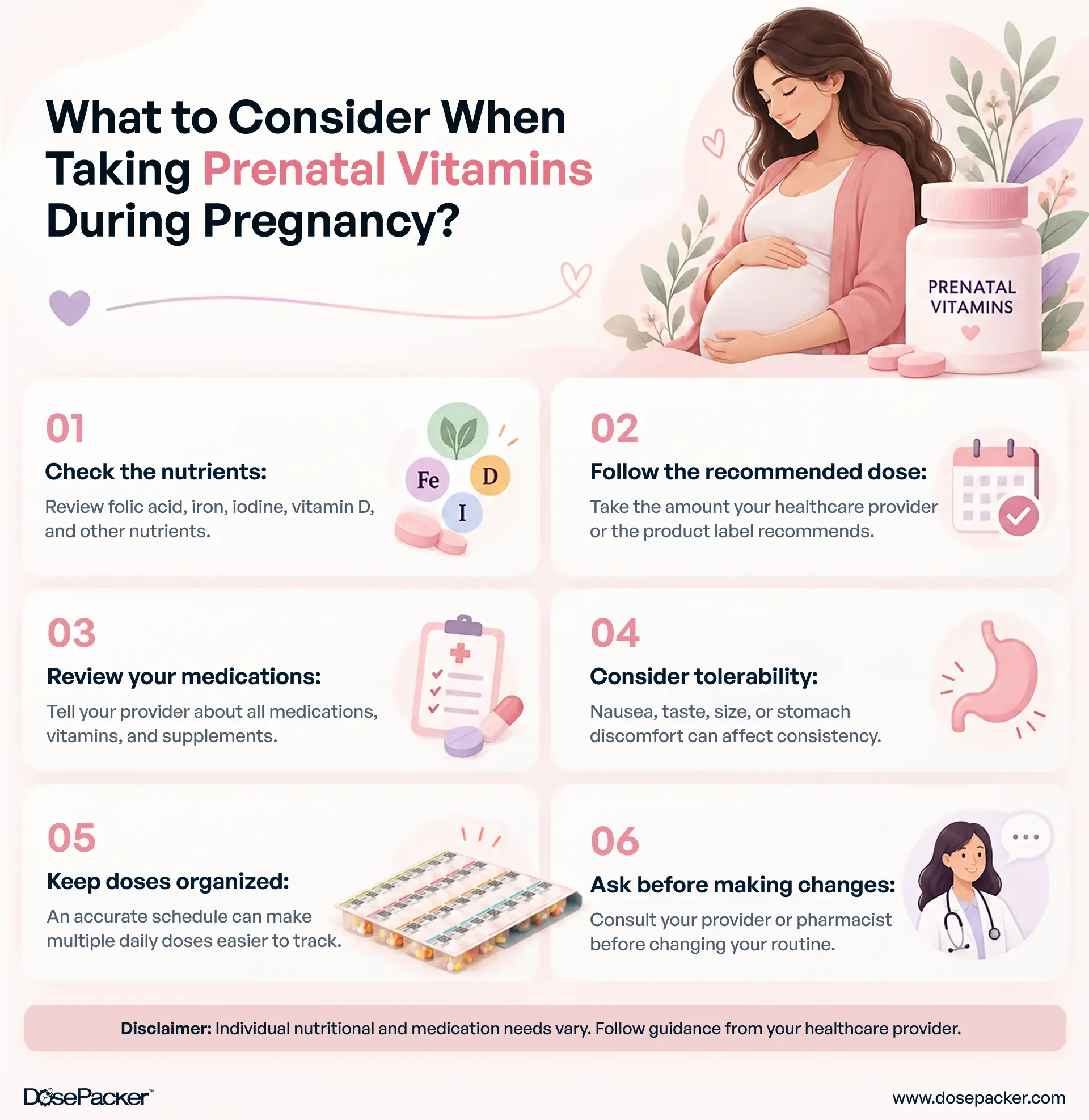
Taking a prenatal vitamin is one part of a broader pregnancy medication routine. When prescriptions, supplements, and changing schedules are involved, having a clear way to organize each dose can make the routine easier to follow.
DosePacker provides medication adherence solutions, tracking tools, and reminder technology designed to support established medication schedules.
For expecting mothers managing multiple medications or supplements, the right tools can help make daily medication routines more manageable.
Make Your Prenatal Routine Easier to Manage
See how DosePacker can help organize established medication schedules, track daily doses, and provide reminder support throughout pregnancy.
Medical Disclaimer: The information provided in this article is for general educational and informational purposes only and is not intended to replace professional medical advice, diagnosis, or treatment. Every pregnancy and medication regimen is different. Always consult your healthcare provider or pharmacist before starting, stopping, or changing any prenatal vitamin, medication, or supplement. Do not make changes to your treatment or medication routine based solely on the information provided here.
