
Want to know the latest trends in senior living? From smart technology to eco-friendly designs, explore how 2026 is redefining the future of aging and senior care.

America’s landscape will take an increasingly silver turn in 2026. The Congressional Budget Office (CBO) estimates the U.S. population will increase from 350 million people in 2026 to 372 million in 2055, with the number of seniors 65 years of age and older increasing faster than any other age group.
Now that older adults are hitting retirement age in huge numbers, they’re looking for better housing and healthcare options than what their parents had. They want to stay independent, stay connected, and live a lifestyle that keeps up with them.
With seniors at the forefront, the demand for smarter, more personalized solutions is skyrocketing. So, what’s next for senior living? From high-tech health monitoring to eco-friendly senior communities, 2026 promises exciting changes that will redefine aging. Let’s dive into the top trends in the senior living industry.
Level Up Your Care Community With DosePacker
As senior living trends continue to evolve, 2026 is shaping up to be a breakthrough year for tech-driven care. From AI-powered monitoring systems to voice-activated assistants, innovation is making aging safer, more convenient, and more independent.
Here’s how smart technology is transforming senior living:
Smart wearable devices and home sensors now track vital signs, detect falls, and even predict health risks, giving seniors and their families peace of mind.
Missed medications can be dangerous, but solutions like DosePacker’s Compliance Packaging ensure seniors take the right dose at the right time, improving adherence and reducing hospital visits.
Embracing technology can make compliance easier than ever:
Automated Documentation: Digital records reduce paperwork errors and ensure real-time updates. Solutions like DosePacker’s CareCommunityOS simplify documentation processes, such as MAR charting, by providing clear, accurate, and real-time information.
Smart Medication Management: Automated dispensing and tracking systems help meet safety standards effortlessly. When it comes to smart medication management, you can always rely on DosePacker’s innovative solutions.
According to AARP’s 2024 Home and Community Preferences Survey, 75% of respondents aged 55 and older state aging in place as an important goal, marking one of the most significant shifts in senior living preferences. With the majority of seniors preferring to remain in their own homes rather than move to facilities, the industry is responding with innovative home-based solutions.
The desire to stay home isn’t just about comfort; it’s about independence, familiarity, and cost. Assisted living costs $45,000 per year, which, after a few short years, will far exceed the expenses of home remodeling.
However, only 10% of U.S. homes are equipped to fully accommodate the needs of older adults, creating a critical need for home modifications and support services.
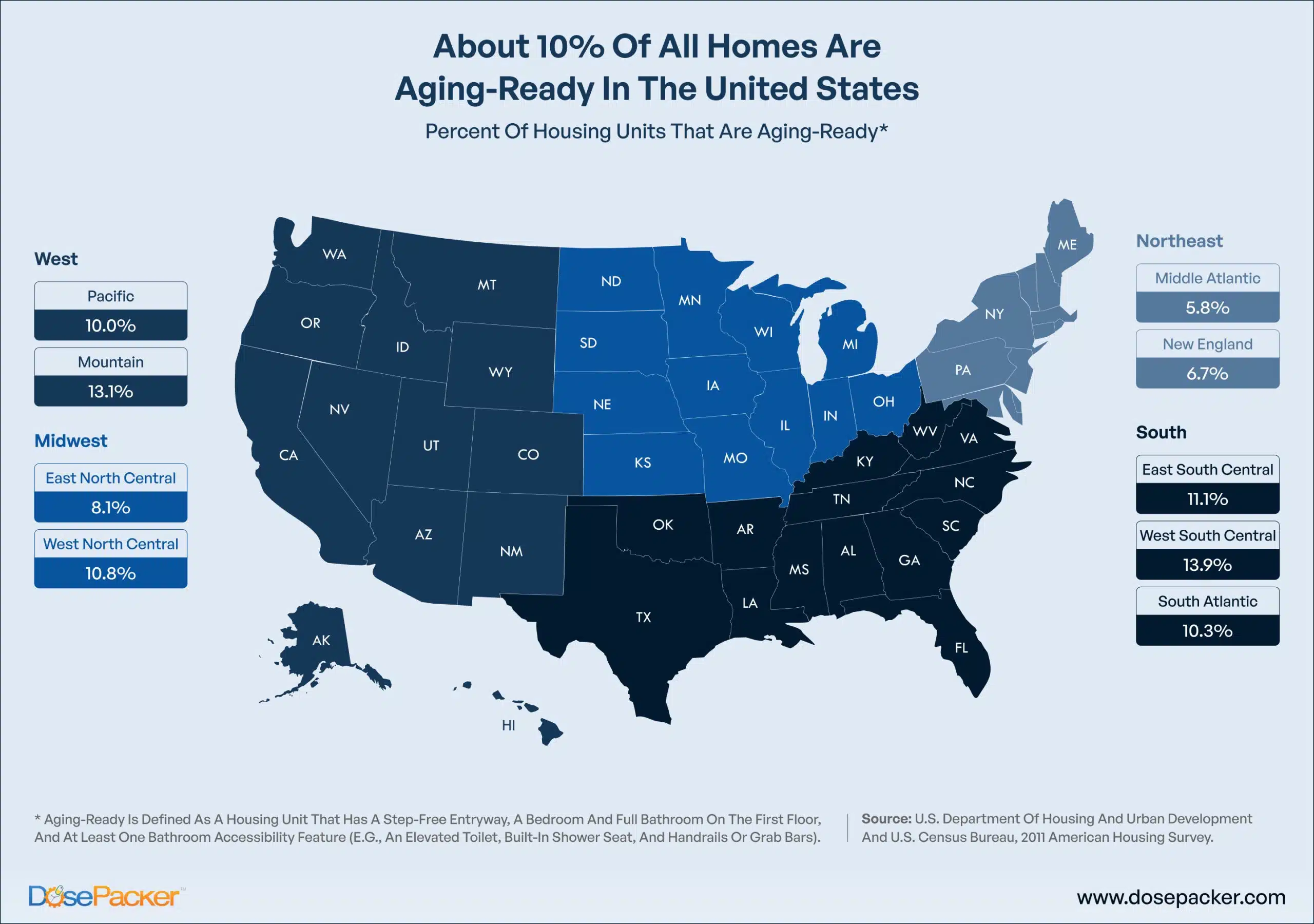
Remote monitoring technology allows seniors to stay home longer while receiving professional care. From medication delivery services to visiting nurses, home-based care is expanding rapidly to meet growing demand.
How DosePacker Supports Aging in Place: Our medication packaging and delivery solutions enable seniors to safely manage their prescriptions at home, reducing the need for facility-based care while maintaining independence.
Technology is making senior care smarter, but achieving wellness goes beyond gadgets. In 2026, trends in senior living are shifting from a one-size-fits-all approach to personalized, whole-body wellness, because aging well means living well.
Senior wellness is no longer about generic exercise routines. Personalized programs now consider mobility levels, chronic conditions, and individual goals, whether they involve strength training, yoga, or gentle movement therapies.
Staying sharp and connected is just as important as staying active. A study from the National Library of Medicine shows that seniors who engage in cognitive training, social activities, and even VR experiences benefit from improved brain function and overall well-being.
Stress management, diet, and alternative therapies (such as acupuncture and meditation) are playing a larger role in senior care. Care communities and providers are offering more integrative wellness options to support long-term health.
As the senior population grows, so does the need for comprehensive mental health support and specialized dementia care. An estimated 7.2 million Americans age 65 and older live with Alzheimer’s dementia today, and this number could grow significantly in the coming decades.
Health and long-term care costs for people living with dementia are projected to reach $384 billion in 2026 and nearly $1 trillion in 2050. Beyond the financial burden, families face the emotional strain of caregiving, with nearly 12 million Americans providing unpaid care for people with Alzheimer’s or other dementias.
Senior living communities are investing in specialized dementia care that goes beyond traditional approaches:
Mental health is no longer an afterthought in senior care:
DosePacker’s Role: Proper medication management is crucial for mental health and dementia care. Our packaging solutions help ensure seniors take psychiatric medications correctly, reducing adverse interactions and improving treatment outcomes.
The pandemic accelerated telehealth adoption, and in 2026, virtual healthcare will become a permanent fixture in senior care. 25% of Medicare fee-for-service users had a telehealth visit in 2024, a rate similar to 2023, demonstrating sustained adoption beyond the pandemic’s peak.
With fewer than 7,000 certified geriatricians nationwide, many elderly patients struggle to secure timely in-person appointments. Telehealth bridges this gap, offering:
Telehealth reduces transportation challenges, eliminates exposure to illnesses in waiting rooms, and provides faster access to specialists regardless of location. Recent federal policy updates have extended telehealth coverage for non-behavioral/mental services provided in a patient’s home through January 30, 2026, making virtual care more accessible than ever.
Seniors are becoming increasingly tech-savvy, making telehealth adoption easier. Providers are also investing in user-friendly platforms with simplified interfaces designed specifically for older adults who may be less familiar with technology.
With more seniors prioritizing sustainability, communities are trying to keep up with the latest senior living design trends to create greener, healthier spaces.
Here’s how eco-friendly senior living is making an impact:
Care communities are going high-tech and low-impact, with solar panels, energy-efficient lighting, and eco-friendly materials creating healthier, more sustainable homes.
Today’s seniors are making greener choices, from sustainable food sourcing to eco-friendly transportation. More communities are embracing sustainability, and DosePacker supports this shift with its Vial Packaging made from food-grade recyclable polypropylene, combining safety with environmental responsibility.
Outdoor gardens, walking trails, and nature-inspired designs are becoming staples in senior living. These help residents stay active while staying connected to the environment.
Senior living nowadays is transforming from just care to a community, ensuring seniors stay engaged, connected, and fulfilled.
More residents prefer cohousing, where they share community spaces while maintaining private spaces. Multi-generational living is also on the rise, bringing seniors and younger generations together for mutual support and companionship.
Staying socially active is essential for well-being. Senior communities are fostering engagement through:
Facilities are redesigning spaces to encourage connection, such as:
Just as senior care is changing fast, it also brings a fresh set of regulations to enhance care quality, safety, and operational efficiency. These changes impact areas like medication management, staffing, and overall care standards. So, how can facilities adapt without compromising the quality of care? Let’s find out.
Recent regulations are tightening key areas to ensure seniors receive safer, higher-quality care. Here’s what is about to shift in 2026:
While these regulations seem daunting, care communities can maintain compliance and uphold exceptional care by:
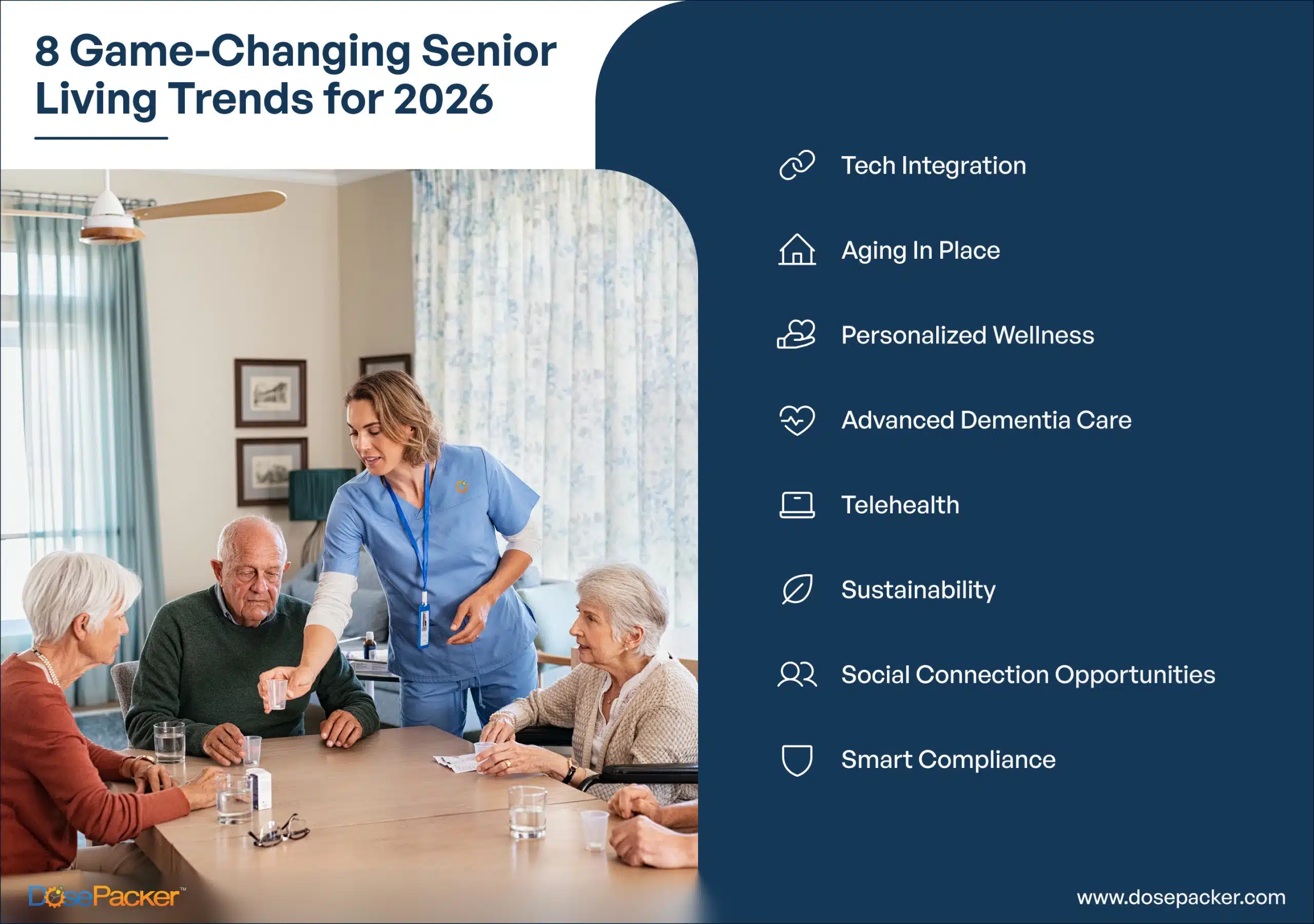
Senior living is evolving faster and better than ever, with more innovative technology, personalized wellness, eco-friendly communities, and stronger social connections. These trends aren’t just shaping 2026; they’re redefining how seniors experience care, comfort, and independence.
From the growing preference for aging in place to the critical expansion of dementia care and telehealth services, the landscape of senior living is becoming more diverse, accessible, and person-centered than ever before. Whether seniors choose to remain in their homes with support services, move to eco-conscious communities, or access specialized care, the options available today reflect a deeper understanding of what aging well truly means.
As innovation moves forward, so should we. Whether it’s simplifying medication management, enhancing care coordination, staying ahead of compliance, or supporting the diverse ways seniors choose to age, DosePacker is here to help. The future of senior living isn’t just coming; it’s already here. Let’s embrace it together.
Experience Smarter Solutions Now
