
Pediatric diabetes management requires coordinating medication routines with everyday activities. This guide shows parents and caregivers how to build consistent routines and organize prescribed medications while supporting a child's health and growing independence.

A family outing can require extra preparation when a child has diabetes. Parents may need to plan around meal times, physical activity, blood glucose monitoring, and access to prescribed medications and supplies. Even a change in the day’s schedule can mean adjusting plans to keep the child’s care on track.
For families navigating pediatric diabetes, these everyday decisions are part of ongoing care. Managing diabetes in children involves following an individualized treatment plan, coordinating responsibilities among caregivers, and helping children understand their needs as they grow. With thoughtful preparation and consistent routines, families can make daily diabetes management easier to navigate at home, at school, and during activities.
This responsibility is significant. According to the CDC’s report, approximately 364,000 U.S. children and adolescents younger than 20 had diagnosed diabetes, including 314,000 with type 1 diabetes. These figures highlight the importance of consistent, age-appropriate support for young people living with the condition.
For parents and caregivers, the goal is to build a routine that fits a child’s everyday life while following the treatment plan their healthcare team established. Understanding the challenges, preparing for schedule changes, and keeping medication responsibilities organized can make daily diabetes care easier to navigate.
Make Pediatric Diabetes Management Easier to Navigate
Children are continually growing, learning, and becoming more independent. Their diabetes care needs to accommodate those changes while accounting for the differences between type 1 and type 2 diabetes.
With type 1 diabetes, the body does not produce the insulin needed to regulate blood glucose, making insulin treatment essential. Type 2 diabetes involves insulin resistance and may also involve insufficient insulin production. Depending on the child’s condition, treatment may include insulin, other prescribed medications, nutrition planning, physical activity, and regular glucose monitoring.
The NIDDK explains that growth, puberty, changing activity levels, and the transition toward independence can make diabetes more unpredictable for children and teenagers.
A child’s day may begin with breakfast and monitoring, continue with lessons and recess, and end with sports practice, homework, and dinner. Weekends, holidays, sleepovers, and family trips introduce further changes.
These shifts can affect meal timing, physical activity, glucose levels, and when prescribed treatment is given. A routine that works on a school day may need additional planning for a weekend activity or an unexpected change in plans.
Families therefore need a care plan that accounts for everyday variability. Changes to insulin, medication doses, or treatment timing should always follow guidance from the child’s healthcare team.
A younger child may depend on a parent for nearly every aspect of diabetes care. A school-age child may begin recognizing monitoring equipment and understanding why certain routines matter. A teenager may take a more active role in treatment while still needing guidance and supervision.
The appropriate level of independence depends on the child’s maturity, experience, and ability to recognize and respond to changes in blood glucose.
Parents can encourage participation by explaining routines in age-appropriate language, involving children in simple tasks, and helping them understand when to ask an adult for assistance. The objective is to build confidence without expecting children to take on responsibilities they are not ready to manage.
When several aspects of diabetes care need attention throughout the day, a dependable routine helps caregivers keep track of what needs to happen and when. Pediatric medication management is one part of this process, helping parents organize prescribed treatments alongside blood glucose monitoring, meals, physical activity, and other daily care responsibilities.
The best starting point is the child’s individualized diabetes care plan. This should guide monitoring, treatment, meal planning, activity-related precautions, and responses to high or low blood glucose. Families should work with their child’s healthcare team to understand each instruction and determine how it fits into everyday life.
Families may find it easier to follow a routine when they incorporate care tasks into established parts of the day. Preparing supplies before school, reviewing the day’s schedule each morning, and checking that necessary items are packed before an outing can reduce last-minute confusion.
However, routines and reminders should support the prescribed care plan, not replace it. Insulin timing and dosage must follow the child’s medical instructions, and glucose monitoring should occur as directed.
A written schedule can be particularly useful when several people share caregiving responsibilities. It provides a common reference for parents, grandparents, babysitters, and other adults who may help with the child’s care.
Children may need access to glucose meters or continuous glucose monitoring equipment, insulin delivery supplies when prescribed, fast-acting glucose sources for treating hypoglycemia, and emergency instructions.
The precise requirements depend on the child’s treatment plan. Families should establish what needs to be available at home, at school, during sports, and when traveling.
A consistent preparation routine can help caregivers identify missing supplies before leaving home. Store medications and monitoring equipment according to their specific instructions, including any temperature requirements.
When a child moves between home, school, extracurricular activities, and other caregivers, important information needs to move with them.
Parents should establish a clear process for communicating treatment instructions, monitoring responsibilities, medication administration, and emergency procedures. The school nurse and other designated staff should understand the child’s diabetes care plan and know whom to contact when assistance is needed.
This coordination reduces uncertainty about responsibilities and helps ensure the adults involved follow the same instructions.
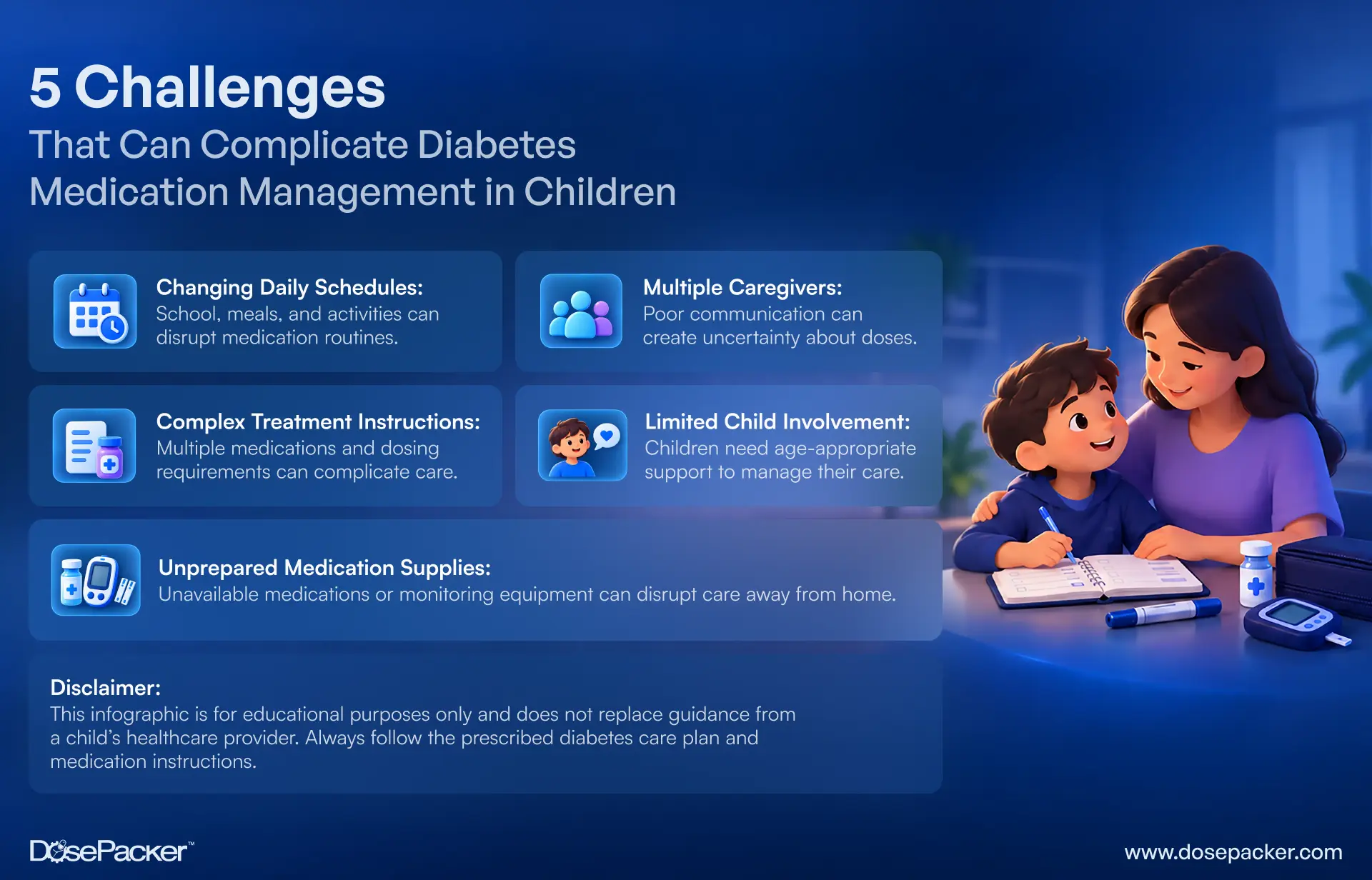
Medication is one component of diabetes care, but managing it correctly can become more complicated when a child has several prescribed treatments or needs assistance from multiple caregivers.
Effective diabetes medication management begins with understanding the medication schedule, administration instructions, storage requirements, and precautions provided by the prescribing clinician or pharmacist. Any system used to organize medication should accurately reflect those instructions.
Treatment depends on the type of diabetes and the child’s individual clinical needs. Children with type 1 diabetes require insulin. Some children with type 2 diabetes may be prescribed insulin, oral medications, or other treatments, depending on their circumstances and clinical guidance.
For this reason, diabetes management medication routines should never be treated as a one-size-fits-all process. Parents should know which medications have been prescribed, when and how to administer them, and what to do if a dose is missed or a problem occurs.
Insulin and other diabetes treatments may have different administration, storage, and handling requirements. Not every medication is suitable for the same packaging or organization method. Families should consult their pharmacist before changing how they prepare, store, or carry medications.
For a parent preparing for a busy morning, the challenge may be remembering which medication is due, confirming whether it has already been administered, and ensuring that necessary supplies are ready for the day.
A written medication schedule, clear labels, and a consistent process for recording administration can make these responsibilities easier to manage. When several caregivers are involved, everyone should understand how to verify whether a dose has been given and how to communicate that information.
These practices are central to the medication management of diabetes. They help caregivers follow the prescribed regimen while reducing avoidable uncertainty. Families can also review medication safety tips to understand the importance of checking medication instructions, maintaining accurate records, and storing treatments appropriately.
As a child’s treatment routine becomes more involved, families may explore tools that make medication organization and caregiver coordination easier.
When evaluating medication management solutions, start with your household's actual needs. Consider how many medications need organizing, whether different caregivers administer them, how doses are documented, and whether the child’s treatment includes products that require specialized storage or delivery.
The process of selecting the right medication management system should start with safety and suitability. A useful system should make medication information clear, support the prescribed administration schedule, and fit the family’s existing care process.
For medications a pharmacist confirms are suitable for organized packaging, compliance packs can group eligible doses by their prescribed administration times. Clear labeling can make scheduled medications easier to identify, especially when multiple caregivers are involved.
However, packaging is not appropriate for every treatment. Insulin, for example, requires its prescribed delivery method and proper storage. A packaging system should never replace glucose monitoring, insulin administration instructions, or emergency supplies.
Families should ask their pharmacist whether a packaging option is appropriate for the child’s medication and how to use it alongside the broader diabetes care plan.
DosePacker offers medication organization and tracking products designed to help make medication routines easier to follow.
Multi-dose compliance packaging organizes medications into clearly identified dose slots based on the established medication schedule. Patient information and dose-level identification help caregivers distinguish scheduled doses without repeatedly sorting through multiple containers.
For families managing diabetes alongside other conditions, this type of organization may be useful for eligible oral medications when approved by the dispensing pharmacist. It does not replace insulin delivery, glucose monitoring, or diabetes-specific clinical instructions.
DoseMinder, designed for use with DosePack, provides visual guidance to help users identify the appropriate dose slot and track medication-taking activity. The MyDoses App offers digital reminders, dose tracking, and caregiver updates to support coordination around the medication routine.
These tools may help families organize suitable medications and communicate more consistently.
Managing diabetes throughout childhood requires flexibility, consistent support, and a care plan that adapts as a child grows. Parents and caregivers can help by maintaining clear medication routines, coordinating with schools and healthcare providers, and preparing for changes in schedules and activities.
With the right support, pediatric diabetes management can become easier to navigate over time. Involving children in age-appropriate care decisions also helps them understand their needs and gradually build confidence in managing their health. A well-organized routine gives families a practical foundation for supporting their child’s well-being as they grow.
DosePacker’s medication organization and tracking products can support selected parts of that process when appropriate for the child’s prescribed regimen. The priority remains the same: help families follow the care plan, protect the child’s safety, and make room for the experiences that come with growing up.
Looking for ways to make medication routines easier to manage?
Disclaimer: This article is for informational purposes only and does not replace medical advice. Diabetes treatment must be individualized by the child’s healthcare team. Always follow prescribed medication, insulin, monitoring, storage, and emergency instructions. Consult your child’s healthcare professional or pharmacist before changing medication routines or packaging.
