
A comprehensive guide to long-term care pharmacy services, exploring how integrated solutions transform medication management in assisted living and nursing facilities through automation, clinical oversight, and seamless technology integration.

When my grandmother moved into an assisted living facility three years ago, I watched the nursing staff juggle medication carts, paper charts, and endless documentation. One nurse told me she spent more time on paperwork than actually caring for residents. That conversation opened my eyes to a critical challenge in long-term care: medication management shouldn’t be this complicated.
Long-term care pharmacy services have evolved significantly, yet many facilities still struggle with outdated systems that increase errors and drain staff resources. If you’re managing a care community, understanding modern LTC pharmacy services isn’t just about compliance; it’s about creating a safer environment for residents and a more efficient workplace for your team.
If you’re ready to transform how your facility manages medications, explore comprehensive pharmacy solutions that integrate seamlessly with your daily operations.
Long-term care pharmacy services provide specialized medication management solutions for assisted living facilities, nursing homes, and residential care communities. Unlike retail pharmacies, LTC pharmacies understand the unique challenges of managing medications for multiple residents simultaneously, often with complex medication regimens and frequent changes.
These services go beyond simply filling prescriptions. They encompass medication reviews, drug interaction monitoring, regulatory compliance support, and integration with facility management systems. Medication errors in long-term care settings can be reduced significantly when comprehensive pharmacy services are properly implemented.
Research from BD’s 2024 study, published in the Journal of the American Pharmacists Association, demonstrates that automated medication dispensing systems lead to a 71% reduction in medication retrieval time and 96% reduction in unscheduled delivery costs.
Ever wondered what the difference is between a regular LTC pharmacy and a smart LTC pharmacy that works best for the modern LTC communities?
We’ve compiled a list of certain features that set both of them apart. Let’s have a look!
Traditional medication management involves sorting individual pills from bottles, a time-consuming process prone to human error. Modern LTC pharmacy services utilize multi-dose compliance packaging that organizes medications by administration time. Each dose is individually sealed and labeled with the resident’s name, the included medications, and the exact administration time.
This approach transforms medication passes from a stressful guessing game into a straightforward process. Staff members can immediately verify they’re administering the correct medications at the right time, reducing anxiety and improving accuracy. According to CMS research, nursing facility residents take an average of 8 to 10 medications per day, making organized dispensing systems essential.
Imagine coordinating 50 residents, each with multiple prescriptions to be refilled on different schedules. It’s a logistical nightmare. Medication synchronization aligns all of a resident’s prescriptions for refills and delivery together, eliminating multiple weekly deliveries and reducing the risk of running out of critical medications.
Research demonstrates that medication synchronization programs improve adherence rates by 10-15% and significantly reduce administrative burden on facility staff.
Beyond dispensing, comprehensive LTC pharmacy services include clinical oversight. Pharmacists conduct regular medication reviews, identifying potential drug interactions, duplicate therapies, or opportunities for deprescribing when appropriate. This clinical layer adds an extra safety net that protects residents and reduces hospitalizations.
A pharmacist might notice that a resident on multiple blood pressure medications is experiencing frequent dizziness, a sign that dosages may need adjustment. These insights, communicated proactively to prescribers or caregivers at the long-term care facility, prevent adverse events before they occur.
For eligible facilities, working with a 340B registered LTC pharmacy can result in significant cost savings. The 340B Drug Pricing Program allows covered entities to purchase medications at ceiling prices, stretching limited resources further. This is particularly valuable for non-profit facilities serving vulnerable populations.
Medication emergencies don’t follow business hours. Quality LTC pharmacy services provide 24/7 availability for urgent medication needs, whether it’s a new resident admission or an unexpected prescription change. Additionally, expert prior authorization support ensures residents receive the medications they need without frustrating delays in care.
The real game-changer in modern long-term care isn’t just the pharmacy services themselves; it’s how technology integrates these services into daily operations. Solutions like those offered through CareCommunityOS, DosePacker’s comprehensive platform, demonstrate how automation can revolutionize medication management.
When pharmacy services integrate directly with facility management software, real-time data synchronization eliminates communication gaps. Staff members receive immediate notifications about medication changes, delivery updates, and resident-specific alerts. QR codes on individual medication doses connect directly to electronic medication administration records, automating documentation that previously consumed hours of nursing time.
Electronic health records and electronic MARs have become essential technologies that integrate between pharmacies and LTC communities, allowing staff to request refills, view prescriptions, and track orders efficiently.
This integration means that when a nurse scans a dose, the system automatically records administration time, verifies the correct medication, and flags any potential issues, all in seconds. The result? Documentation time is cut in half, and caregivers are spending more time on actual resident care.
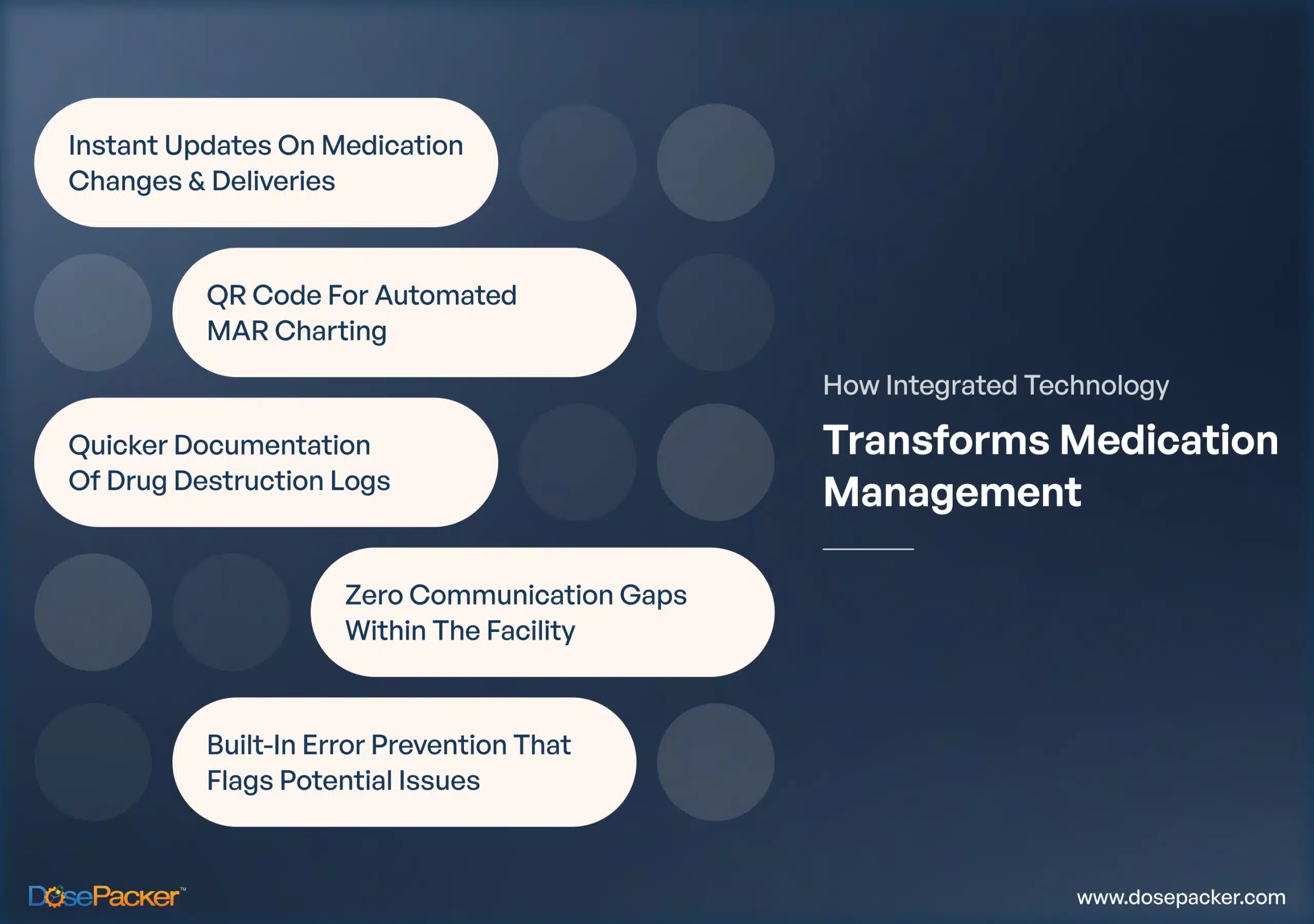
Not all pharmacy services are created equal. When evaluating potential partners, consider these essential factors:
Industry analysis shows that the LTC pharmacy market is approximately $18-19 billion, with national pharmacies controlling over 90% market share, making careful selection crucial.
Switching LTC pharmacy services might seem daunting, especially if you’ve worked with the same provider for years. However, the investment in modern, integrated pharmacy services pays dividends in reduced errors, improved staff satisfaction, and better resident outcomes.
Facilities that have modernized their medication management report not only quantifiable improvements in safety metrics but also qualitative changes in workplace culture. Staff members feel more confident in their medication administration. Families trust that their loved ones receive medications safely and reliably. And administrators sleep better knowing their documentation withstands any regulatory scrutiny.
The future of long-term care pharmacy services isn’t about fancy technology for its own sake; it’s about using innovation to refocus on what matters most: caring for residents with dignity and safety. When medication management becomes simpler, staff members can redirect their energy toward the meaningful interactions that make a care community feel like home.
Ready to see the difference modern pharmacy services can make?
