
Traditional pill organizers, automated dispensers, and modern solutions like DoseMinder each take different approaches to medication management. This comparison explores how each system handles real-world adherence challenges to help you choose the right solution for your needs.
Ask someone about medication reminders, and they’ll tell you about alarms, apps, or the pill organizer they bought at the pharmacy. Ask them if their system actually works, and you’ll get a different answer.
“Well, it works when I remember to use it.”
That sentence reveals everything wrong with how we’ve approached medication management. We’ve focused on building better reminder systems without asking a more fundamental question: What makes someone consistently use a reminder system in the first place?
According to the American Heart Association, medication non-adherence causes approximately 125,000 deaths annually in the United States. These aren’t people who refused treatment; they’re people whose reminder systems failed them, or who failed to use them.
Traditional pill organizers, automated dispensers, and hybrid devices like DoseMinder each take different philosophical approaches to this challenge. Understanding these approaches matters more than comparing feature lists, because the most sophisticated device you won’t use consistently can’t compete with a simpler solution you will.
So let’s reframe the question: Not “which medication reminder is most advanced?” but “which one will you still be using six months from now?”
Traditional medication reminder systems typically fall into three categories: basic pill organizers, timer-based reminder devices, and automated dispensers.
The Weekly Pill Organizer is the veteran of medication management. You’ve seen them, plastic boxes with compartments labeled Monday through Sunday, sometimes with AM/PM divisions. They’re inexpensive and straightforward. Jane, a working professional managing her mother’s care remotely, swears by them for pre-sorting medications.
But here’s where reality bites: A study published in the Journal of Managed Care & Specialty Pharmacy found that, even with pill organizers, adherence rates improved by only about 11%. Why? Because organizing pills is one thing, remembering to actually take them is another.
Timer-Based Reminder Devices add audible or visual alerts to storage. Products like the MedCenter Talking Alarm Clock or TabTime combine compartments with alarms. They cost between $30 and $ 80 and address the “forgetting” problem directly.
Robert, a 68-year-old heart patient, tried one for three months. “The alarm worked,” he said, “but sometimes I was away from home, or the battery died, or I’d already taken my pills and couldn’t remember if I’d heard that alarm today or yesterday.”
Automated Pill Dispensers represent the high-end of traditional solutions. Devices like Hero or MedMinder dispense pre-loaded medications at scheduled times, often with smartphone notifications. They range from $30 to $ 60 per month.
These sound perfect, right? They solve the problems of sorting, remembering, and tracking. But they come with trade-offs: a complex setup, monthly costs, a dependency on Wi-Fi connectivity, and, critically, the need for someone to load them correctly every month.
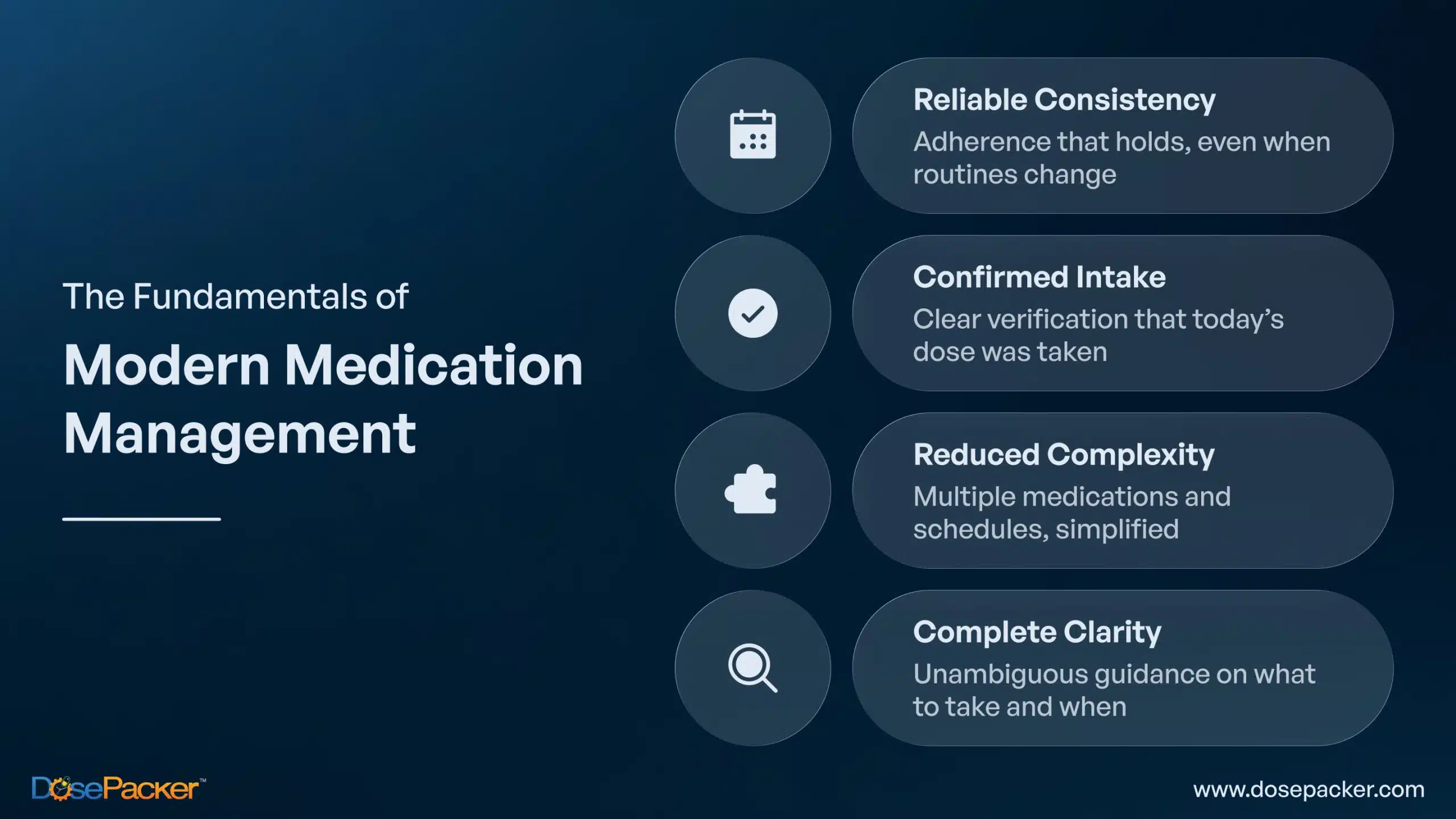
What makes medication adherence so challenging isn’t just memory; it’s the intersection of multiple factors.
Think about Mark, a 45-year-old managing anxiety and high cholesterol. His morning routine includes checking work emails, getting kids ready for school, and squeezing in a gym session. His medication reminder app pings at 7 AM, but by the time he finishes a work call, he’s genuinely uncertain: Did I already take those pills?
The Centers for Disease Control and Prevention reports that medication non-adherence causes approximately 125,000 deaths annually and costs the healthcare system up to $300 billion per year. Behind these numbers are real people facing real barriers:
Traditional solutions address some of these needs but rarely all of them simultaneously.
DoseMinder bridges traditional storage with modern reminder capabilities, creating what users describe as “the sweet spot” between simplicity and effectiveness.
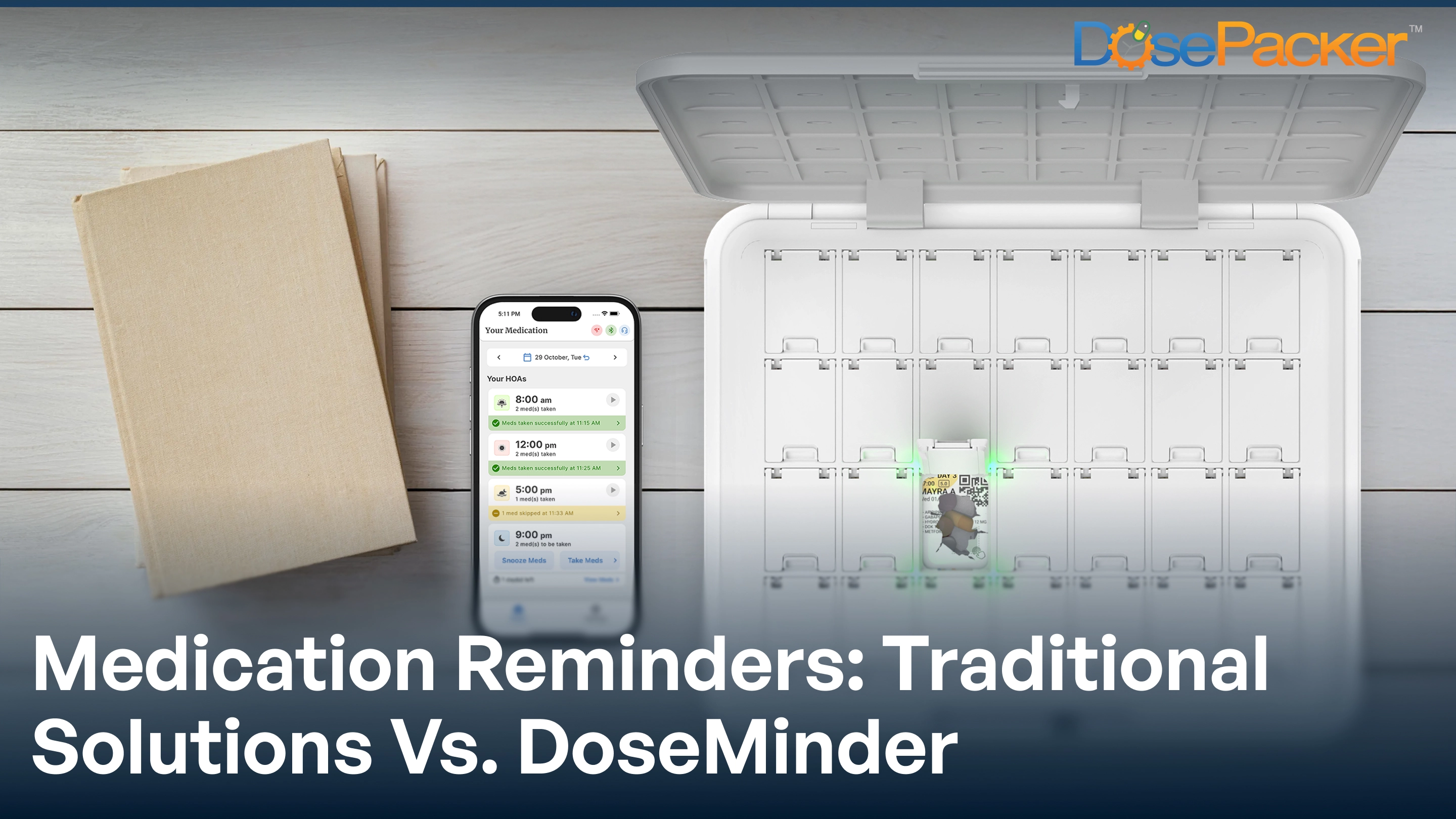
Here’s what makes it different: It’s a 31-day medication organizer with built-in alarm reminders. Not a subscription service. Not an app requiring smartphone fluency. Not a complex automated system requiring technical setup.
The device features individual compartments for each day of the month, audio/visual alarms for for your personal medication routine, and is connected to an app with a user-friendly layout. The setup takes minutes, load your monthly medications, set your reminder times, and you’re done.
But the real innovation is in what DoseMinder confirms. Each compartment has a lid. When your alarm sounds, you open today’s compartment, see the medications (or see it empty if you already took them), and there’s your answer to the nagging question: “Did I take my pills?”
The answer to this question can also be verified by the medication intake videos recorded by DoseMinder and sent to caregivers for confirmation.
Geriatric care specialists note that confirmation mechanisms are crucial for medication adherence, especially for patients managing cognitive decline. They explain that it’s not just about reminding, it’s about eliminating the anxiety of uncertainty.
Travel Scenario: Traditional weekly organizers work for short trips but require remembering to pack them. Automated dispensers are impractical for travel. DoseMinder’s monthly capacity means Sarah, who travels weekly for work, can pack her entire medication routine into one compact device with built-in reminders.
Multiple Medications: Basic organizers require sorting but offer no reminders. Automated dispensers handle multiple medications, but at subscription costs and with a complex setup. DoseMinder works perfectly with our multi-dose compliance packaging, which has individual compartments clearly labelled with medication time and date with color-coded illustrations.
Cognitive Support: For patients with early dementia, traditional organizers offer no confirmation of whether today’s dose was taken. Automated dispensers lock previous compartments but can confuse users during setup. DoseMinder’s simple interface, with video confirmation that provides tangible reassurance.
The “best” medication reminder solution isn’t universal; it depends on your specific needs.
Choose traditional weekly organizers if: You have a reliable memory for taking medications but need help organizing them, you manage a few medications with simple schedules, or you’re on an extremely tight budget.
Consider automated dispensers if: You manage complex medication regimens with multiple daily doses, you or a caregiver can handle initial setup and monthly reloading, your home has reliable internet connectivity, and subscription costs fit your budget.
DoseMinder works best if: You need reliable reminders without subscription fees, you value simplicity and don’t want app dependencies, you travel frequently and need month-long medication coverage, you want visual confirmation that you’ve taken your medication, or you’re seeking medication reminder strategies that balance technology with accessibility.
The medication reminder device you’ll actually use consistently beats the most sophisticated system you’ll abandon after two weeks
Technology should simplify our lives, not complicate them. The most effective medication management solution is the one that integrates seamlessly into your daily routine, provides the confirmation you need, and removes barriers rather than creating them
For many users, DoseMinder represents that balance, enough technology to keep you on track, enough simplicity to use it without stress, and enough capacity to stop worrying about daily refills.
Your health depends on taking medications as prescribed. The question isn’t whether you need a reminder system; it’s which system will actually work for your real life, not your ideal life.
Ready to simplify your medication routine?
Explore DoseMinder and discover how straightforward medication management can actually be.
