
A practical guide to choosing the right medication cart for your healthcare facility, comparing traditional options with modern smart cart technology.
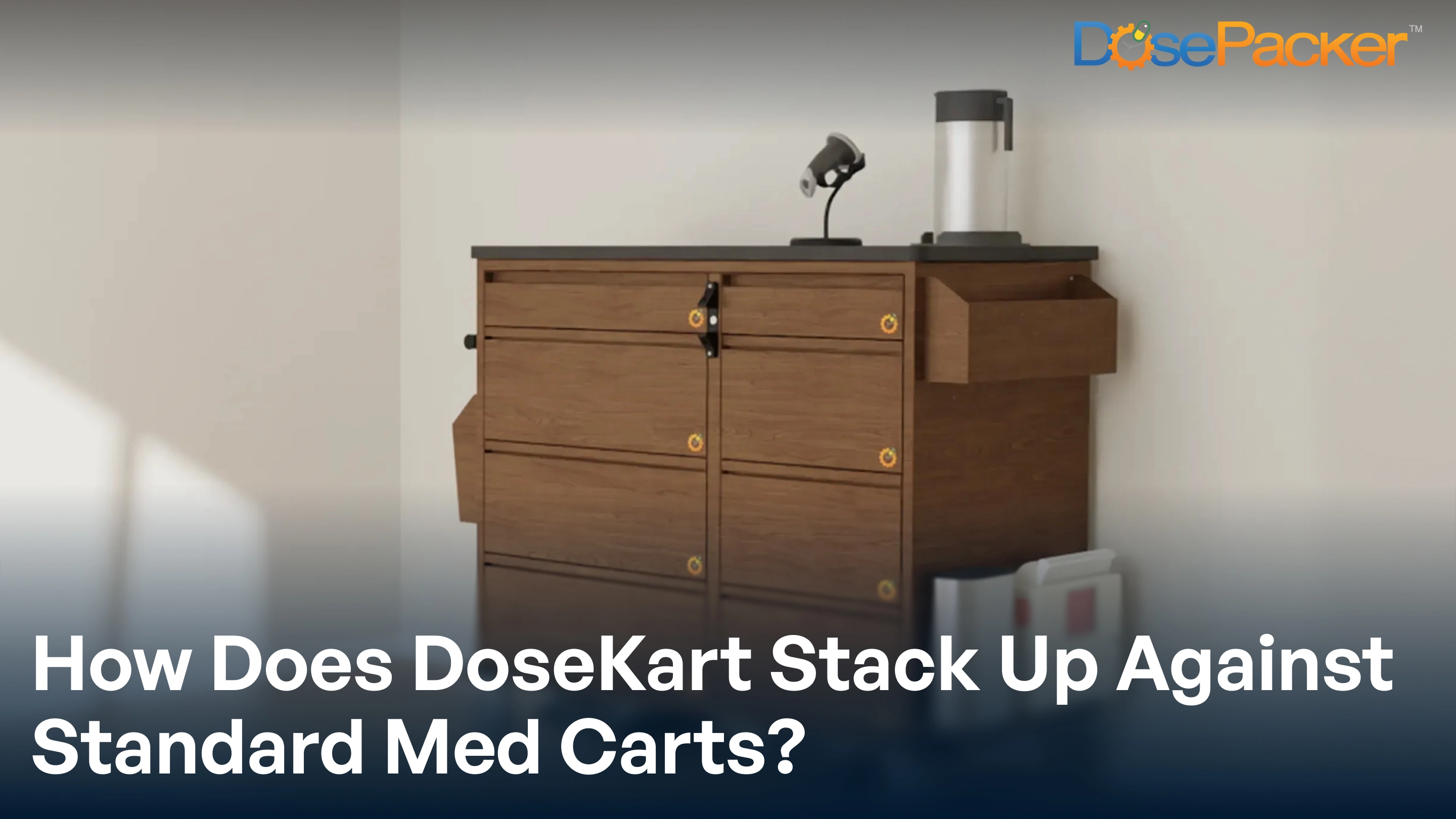
At 2:47 AM, everything looks the same.
The medication names blur together. The cart drawer is stuck – again. Your caregiver is managing seven patients, fielding call lights, and trying to remember if the resident in Room 8 already received their insulin. This is when errors happen. Not because nurses are careless, but because systems fail them.
Research found that wrong-time errors account for over 50% of medication mistakes, and most trace back to equipment and workflow failures, not human incompetence. Your medication cart is either your safety net or your liability.
It either supports exhausted staff during chaotic moments or adds one more frustration to an already impossible shift. The question isn’t whether you need a medication cart; it’s whether yours actively prevents the 2:47 AM disasters waiting to happen.
Upgrade Your Medication Cart
A quality medication cart combines durability with intelligent design, not just metal and wheels. The best medical carts feature easy-to-clean surfaces that withstand repeated disinfection without degrading, critical when infection control can mean the difference between recovery and complications. Smooth-rolling casters aren’t a luxury; they’re a necessity when caregivers walk 4-5 miles per shift, and a resistant cart adds unnecessary physical strain.
Security features should be non-negotiable. Individual drawer locks prevent unauthorized access to controlled substances, while master cart locks provide comprehensive protection during breaks or emergencies.
Organizational compartments keep medications sorted by patient or administration time, reducing the cognitive load on staff who are already managing complex care decisions.
Well-organized medication carts can reduce medication preparation time and improve nurses’ productivity. That’s not just an efficiency metric; it’s substantial time per shift that caregivers can redirect toward direct patient care, vital-sign monitoring, or the emotional support that makes healthcare truly healing.
Look for adjustable work surfaces that accommodate staff of different heights, adequate lighting for reading small print on medication labels, and sufficient power outlets for integrating with electronic devices. These details separate adequate equipment from equipment that actively supports excellent care.
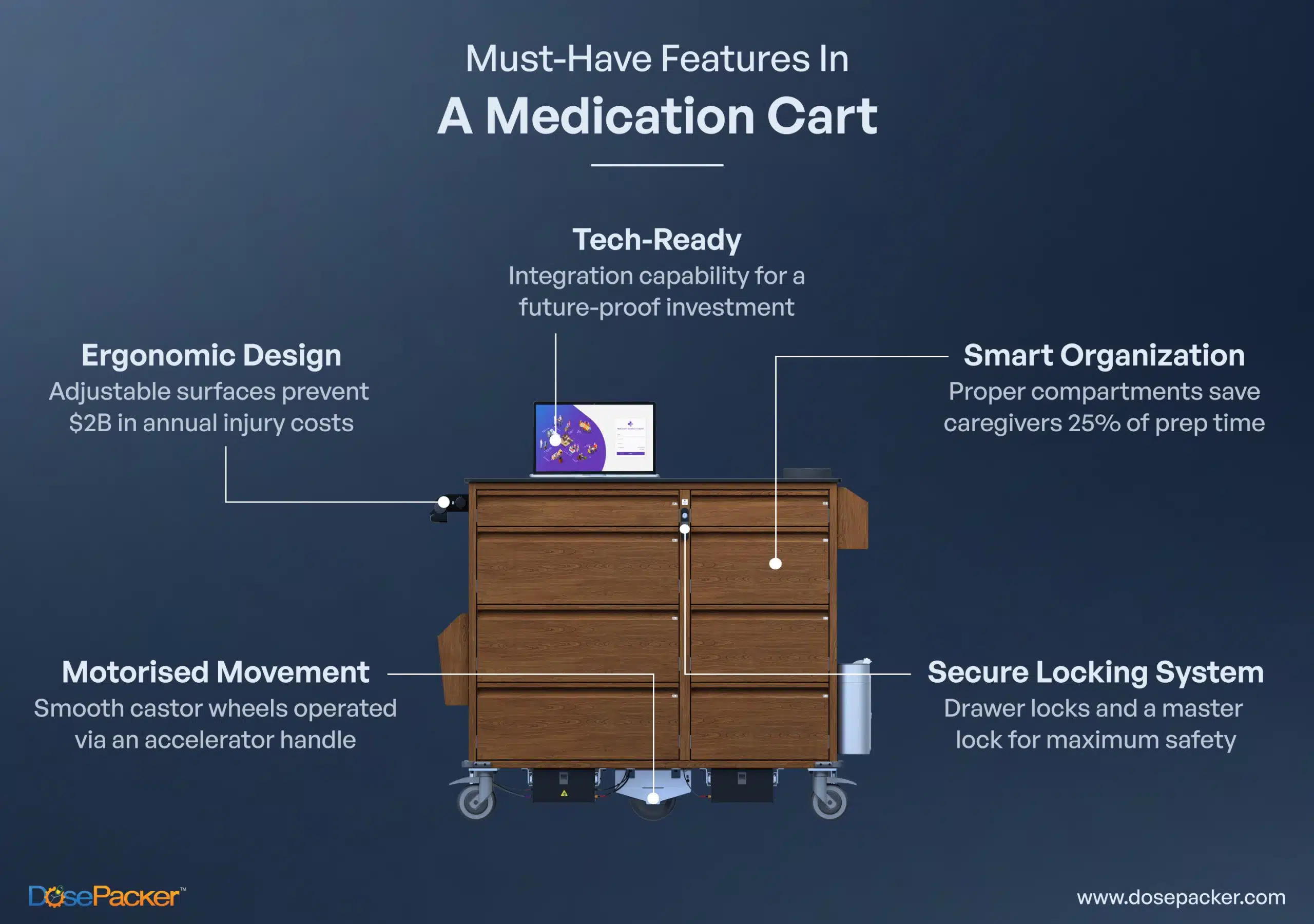
Here are a few features to look for when choosing the best medical care for your care community.
Start with math, not assumptions. Calculate your typical medication load per shift, accounting for peak times and patient turnover. A 50-bed assisted living facility unit has vastly different capacity requirements than a 15-bed skilled nursing facility. Measure your doorways, hallway clearances, elevator dimensions, and medication storage in care communities; the most feature-rich medication cart becomes useless if it can’t navigate your facility’s physical layout.
Seamless construction without crevices where pathogens hide matters more than most people realize. Powder-coated finishes or medical-grade plastics clean more thoroughly than bare metal. Some pharmaceutical carts now incorporate antimicrobial materials directly into their construction, providing an additional layer of protection. In an era where hospital-acquired infections affect 1 in 31 hospital patients daily (CDC data), every infection control advantage counts.
A study estimates that nursing-related musculoskeletal injuries cost the healthcare industry over $2 billion annually. Adjustable work surfaces prevent chronic back strain caused by hundreds of daily medication preparations. Well-placed handles, intuitive drawer arrangements, and appropriate cart heights reduce repetitive reaching and bending. This isn’t about comfort, it’s about preserving your most valuable resource: experienced nursing staff.
Even if you’re purchasing a basic cart today, consider tomorrow’s needs. Does the cart accommodate tablets or laptops? Are there power outlets or battery packs available? Can it integrate with barcode scanners or RFID technology? Technology adoption in healthcare continues to accelerate, and your medical cart organization needs to keep pace! Future-proofing your equipment investment prevents premature obsolescence and the budgetary headaches of replacing perfectly functional carts that can’t adapt to new systems.
Traditional medication carts have earned their place in healthcare through decades of reliable service. These straightforward metal units typically feature multiple locking drawers, a work surface for preparation, and basic security mechanisms
They’re affordable, familiar to the staff, and require minimal training. For many facilities, especially those with straightforward medication protocols and low patient acuity, these carts perform their function admirably.
But healthcare has evolved. Patient populations are more complex, medication regimens are more intricate, and the margin for error has narrowed considerably. Smart medication management systems represent the next generation of patient safety technology.
Modern solutions like DoseKart integrate directly with electronic health records, providing real-time medication tracking and verification. While a traditional med cart stores medications, DoseKart actively prevents errors through digital safeguards.
The system alerts staff to potential drug interactions, verifies patient identity through barcode scanning, and automatically documents each administration, eliminating the documentation gaps that plague manual systems.
According to a study published in the Journal of Patient Safety, facilities using integrated medication management systems experienced a 41.4% reduction in medication administration errors. That translates to fewer adverse events, shorter hospital stays, reduced liability exposure, and, most importantly, better patient outcomes.
The comparison isn’t about declaring one approach obsolete; it’s about matching technology to your facility’s specific challenges, patient needs, and operational realities.
DoseKart systems shine precisely where traditional approaches show strain. High-acuity settings with complex populations benefit enormously from real-time verification and automated documentation.
Facilities struggling with medication error rates above the national average see dramatic improvements, including significant reductions in errors, which translate directly into better patient outcomes and reduced liability exposure. Organizations prioritizing data integration for quality reporting, regulatory compliance, or performance optimization find that DoseKart’s automated documentation eliminates manual data entry, which consumes hours of nursing time each week.
Many forward-thinking facilities adopt hybrid approaches, implementing DoseKart technology in high-risk environments while maintaining traditional carts in lower-acuity areas. This strategy allows you to target risk reduction where it matters most while realistically managing capital constraints.
Selecting the ideal medication cart begins with an honest assessment rather than assumptions. Examine your actual medication error data, not what you hope it is, but what your incident reports reveal.
Talk extensively with the caregivers and staff who’ll use this equipment every single shift; their insights often uncover practical considerations that escape administrative notice. Consider patient acuity trends, not just current census.
Evaluate your facility’s technology infrastructure, medication storage solutions, and staff comfort with digital systems. Budget matters, but so does the cost of inaction. Medication errors damage patient trust, increase length of stay, generate regulatory scrutiny, and expose your facility to litigation risk.
The right equipment investment, whether a traditional medical cart or advanced DoseKart technology, pays dividends in safety, efficiency, and staff satisfaction that extend far beyond the purchase price.
The equipment you choose today shapes the care you deliver tomorrow. Prioritize patient safety and staff support in your decision-making process, and you’ll select a solution that serves your facility well for years to come. Don’t let inertia dictate your equipment choices; let evidence, outcomes, and your commitment to excellence guide your investment.
