
Choosing the right smart pill dispenser can make medication routines easier to organize and manage. Explore nine options for 2027, compare their features, and learn how smart dispensing and multi-dose compliance packaging can support caregivers and long-term care facilities.
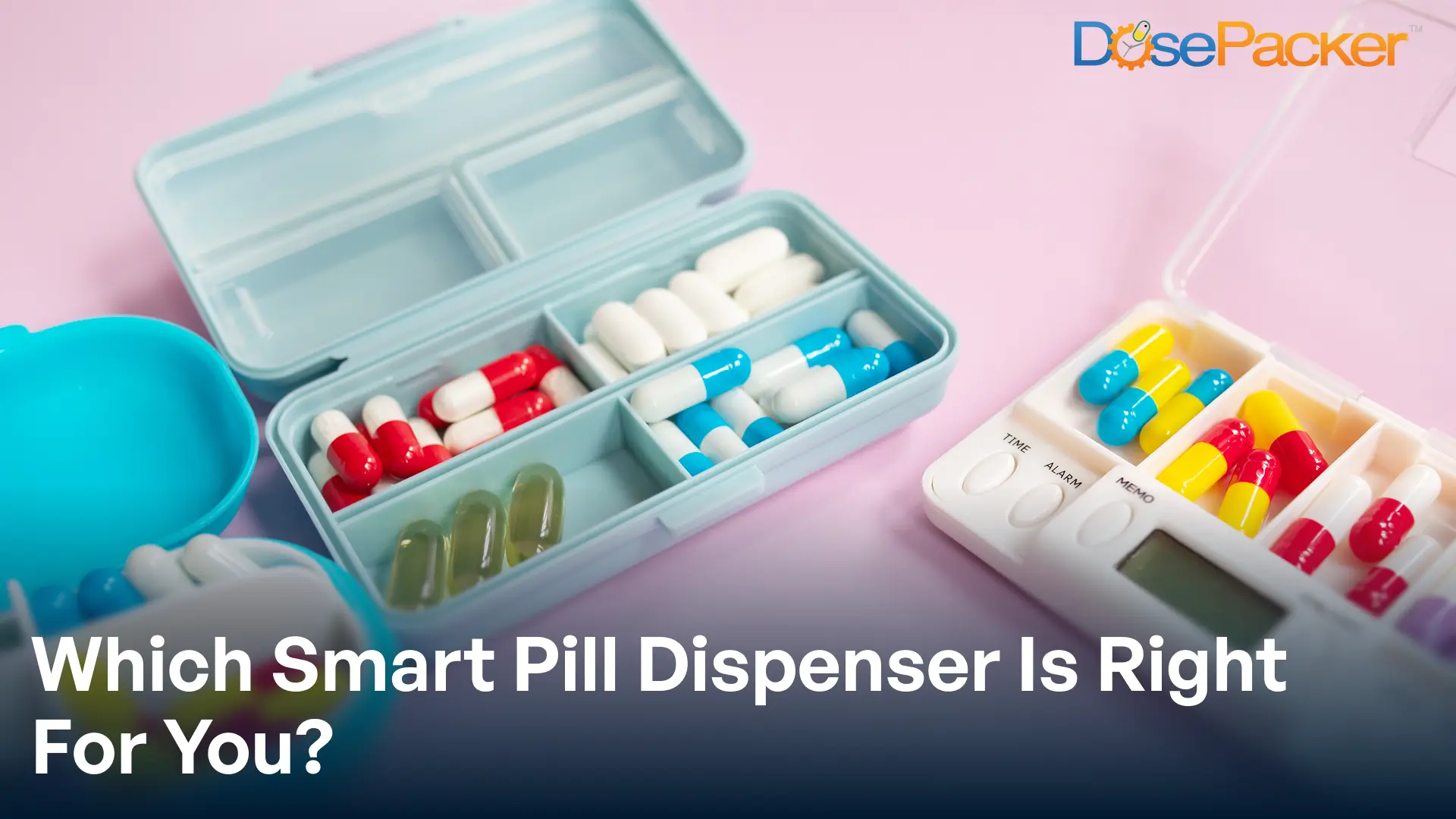
Medication adherence remains a significant challenge, particularly for older adults managing multiple prescriptions. For caregivers and long-term care facilities, managing medication involves more than remembering dose times. It requires accurate dose identification, consistent administration, organized storage, and reliable tracking. A traditional pill organizer may suffice for a straightforward routine, but more complex medication schedules may benefit from additional support.
The challenge is significant. A recent study notes that approximately 40%-75% of older adults with chronic diseases may not adhere to their medication regimens. This range reflects variation across populations and studies, but it shows why medication adherence remains a major concern.
A smart pill dispenser can help address parts of this challenge through scheduled reminders, controlled medication access, dose dispensing, and caregiver notifications. However, not every device is designed for a professional care environment. Some support an individual at home, while others fit into broader medication packaging, storage, and tracking workflows.
This guide compares nine options for 2027, starting with DosePacker's integrated medication management ecosystem for care communities, then covering other dispensers and smart organizers worth evaluating.
A Smart Pill Dispenser is a medication management device that uses features such as scheduled alerts, automated dispensing, connected applications, sensors, or caregiver notifications to help people follow a prescribed medication routine.
The capabilities vary considerably. A basic electronic dispenser may sound an alarm when a dose is due. A connected model may also notify a family member when a dose is missed. More advanced systems can automatically organize medications, restrict access until the scheduled time, or record medication-related activity.
For long-term care facilities, the distinction matters. Staff need to identify the correct resident and medication, follow the prescribed administration schedule, document the outcome, and respond appropriately when something does not go as planned.
Smart medication technology can support these steps, but it does not replace clinical judgment, medication administration protocols, or staff oversight.
The products below serve different needs, from medication administration in care communities to reminders for individuals managing prescriptions at home. The ranking places DosePacker first for its relevance to long-term care operations. The remaining products are presented as alternatives to evaluate by capability and intended setting, rather than as a claim that one device is universally best.
Best suited for: Senior living communities, residential care facilities, and pharmacy-supported medication workflows
When a facility manages medication for multiple residents, the challenge extends beyond reminding someone to take a pill. Staff must also find the right medication pack, verify the intended dose, follow the administration schedule, and keep accurate records.
DosePacker addresses this wider workflow through a connected range of medication management solutions. Instead of relying on a single standalone device, its ecosystem combines DosePack compliance packaging, DoseMinder, DosePacker Storage, DoseKart, and CareCommunityOS.
DoseMinder is a smart medication storage and reminder device designed to work with DosePack and the MyDoses app. At the scheduled medication time, the system alerts users and uses a blue LED to indicate the designated slot. Its sensors monitor medication slots, while dual cameras support video confirmation of the administration process. Caregivers can access medication-related updates through the connected system.
The other components address different parts of the workflow:
Together, these tools help facilities organize medication administration, improve pack identification, and connect medication storage with tracking and documentation.
Why consider DosePacker?
Its main advantage for long-term care is the broader workflow. A standalone dispenser may provide reminders or release medication on schedule, but DosePacker connects packaging, storage, administration guidance, and digital oversight.
Facilities evaluating this approach should confirm how each component fits their existing pharmacy arrangements, medication administration procedures, and software environment.
Best suited for: Individuals taking multiple medications and family caregivers
Hero is designed for people who want to reduce the daily work involved in sorting and taking multiple medications. Its countertop dispenser holds up to a 90-day supply of 10 medications, subject to the device's medication compatibility requirements.
At scheduled times, the dispenser provides sound and light alerts and releases the designated dose when the user presses its dispensing button. The connected app tracks medication activity and can send missed-dose notifications to designated medication partners. The service also includes remote caregiver visibility and customer support.
For families supporting an older adult who lives independently, this combination can reduce the need to sort pills every day and provide greater visibility into the medication routine.
Best suited for: Individuals with complex medication schedules and professional home-care providers
MedaCube is an automated medication dispenser designed to manage multiple medications and scheduled doses. Its current product information describes capacity for up to 16 medications and up to a 90-day supply, with scheduled dispensing, caregiver alerts, and a locking mechanism with a tamper alarm.
Consider the device when manually sorting medication into daily compartments becomes difficult or when caregivers need notifications about missed or delayed doses.
Best suited for: Patients who need reminders and caregivers who want remote visibility
MedMinder combines medication dispensing hardware with software and pharmacy-related services. Its platform helps people manage medication schedules while giving caregivers and healthcare providers access to relevant medication activity.
The service is especially relevant when medication support requires more than a timed reminder. Depending on the selected service and configuration, the system can connect medication adherence information with caregiver oversight and medication coordination.
For home-care providers, this model may help maintain visibility into a patient's routine without requiring every check-in to happen in person.
Best suited for: Individuals who need a programmable dispenser with audible and visual alerts
A scheduled dispenser can be a practical middle ground between a traditional pill box and a connected medication management platform.
The LiveFine Automatic Pill Dispenser uses a rotating tray with 28 compartments and supports scheduled medication reminders. Depending on the model, it offers Wi-Fi connectivity, audible alerts, and visual cues to help users know when it's time to take medication. For individuals with a stable medication schedule, the device lets them organize doses in advance and reduce the need to open multiple containers throughout the day.
Best suited for: Independent users who prefer a compact, app-connected organizer
Not every user needs an automated machine that releases medication. Some need a more organized way to identify which pills to take and receive reminders throughout the day.
EllieGrid takes this approach with a connected pill organizer. It uses a Bluetooth-enabled mobile app, programmed alarms, and illuminated compartments to guide users through their medication routine. The company also describes sensor-based tracking and caregiver notifications through certain service tiers.
Its design may appeal to people who want visual guidance while retaining direct access to their medications. It is also a potential option for caregivers supporting someone who can manage the actual administration but benefits from reminders.
Best suited for: Users who need scheduled dispensing without a complex monitoring platform
For some users, the most helpful technology is a device that keeps the schedule simple. Mobi's smart pill dispenser is a lower-complexity option designed around scheduled medication access and a compartment-based organization system.
A 2026 pill-organizer comparison describes the Mobi model as having 28 compartments and optional Wi-Fi connectivity. It lacks the caregiver notification and remote monitoring features of more connected systems. Buyers should verify the current model's specifications before purchasing.
This type of dispenser may be suitable for someone who can follow a medication schedule independently but benefits from an electronic reminder and structured storage.
Best suited for: Users who need controlled access to preloaded medication compartments
Some medication routines require a dispenser that limits access to the scheduled dose rather than leaving every compartment available throughout the day.
The e-pill MedTime Station Pro is a timed medication dispenser with a 28-compartment tray. A lockable dispensing system may help users who need additional support to follow the prescribed schedule. The device's fit depends on the individual's dexterity, vision, cognitive needs, and ability to respond to alerts.
For facilities, controlled access is only one part of medication safety. Staff must also consider who can refill the tray, how medication changes are managed, and whether the dispenser can support the required documentation process.
Best suited for: Individuals who need a basic automated medication reminder
A simpler dispenser may be enough if a person has a relatively stable medication routine and doesn't need extensive remote monitoring.
Before selecting a model, buyers should confirm the number of compartments, supported dosing frequency, alarm types, refill requirements, and whether the device locks unused doses. These details matter more than the product label alone.
For a long-term care facility, treat Windtrace as a candidate for further evaluation rather than assuming it's a complete medication management platform. The facility should verify whether the product's actual capabilities meet its operational and safety requirements.
The care team needs a system that fits the way the facility actually operates. The most useful device addresses the team's specific challenges without adding steps or creating a separate process for every resident.
Before choosing a smart pill dispenser, evaluate these factors.
Start by identifying what the facility needs to improve. Is staff spending too much time locating medication packs? Are residents missing scheduled doses? Do caregivers need better visibility into medication administration? Or is the main issue maintaining records across multiple care locations?
A dispenser designed for one individual may be appropriate for a home setting but insufficient for a facility managing medication for dozens of residents.
For multi-resident environments, look for compatibility with existing pharmacy processes, resident identification, medication records, and staff responsibilities.
Medication schedules differ from resident to resident. A device should accommodate the prescribed administration frequency, the number of medications involved, and the relevant refill intervals.
Ask whether the device supports the required daily doses, how it handles medication changes, and whether it can accommodate residents' formulations. Some dispensers are designed for whole tablets and capsules, while others depend on prepackaged medication doses.
The system must fit the prescribed regimen. Never alter medication timing or dosage simply to accommodate a device.
An alarm can remind someone that medication is due, but the next question is what happens if the person does not respond.
Depending on the care setting, useful features may include missed-dose notifications, dose-related activity logs, caregiver access, and escalation procedures. Facilities should also establish how staff will verify administration and document any missed or refused doses.
Digital alerts support oversight, but they should work alongside the facility's medication administration policies.
A secure medication system should help prevent unauthorized access and make the intended dose easy to identify.
When assessing options, review locking mechanisms, user permissions, resident identification, refill procedures, and safeguards against selecting the wrong medication. Also consider how staff will handle device failures, power interruptions, connectivity issues, and urgent medication needs.
These medication safety tips are essential when evaluating equipment for a professional care environment.
For long-term care teams, a dispenser is only one part of medication administration. Staff may also need to update records, track adherence, coordinate with pharmacy providers, and communicate changes across shifts.
A connected system can reduce fragmented workflows when it integrates appropriately with the facility's existing processes. Before committing, confirm which records are captured automatically, which actions require staff input, and how exceptions are documented.
A traditional pill organizer is a simple storage tool. A smart pill dispenser adds electronic guidance or automation, while a connected medication management system may extend into tracking, notifications, and facility operations.
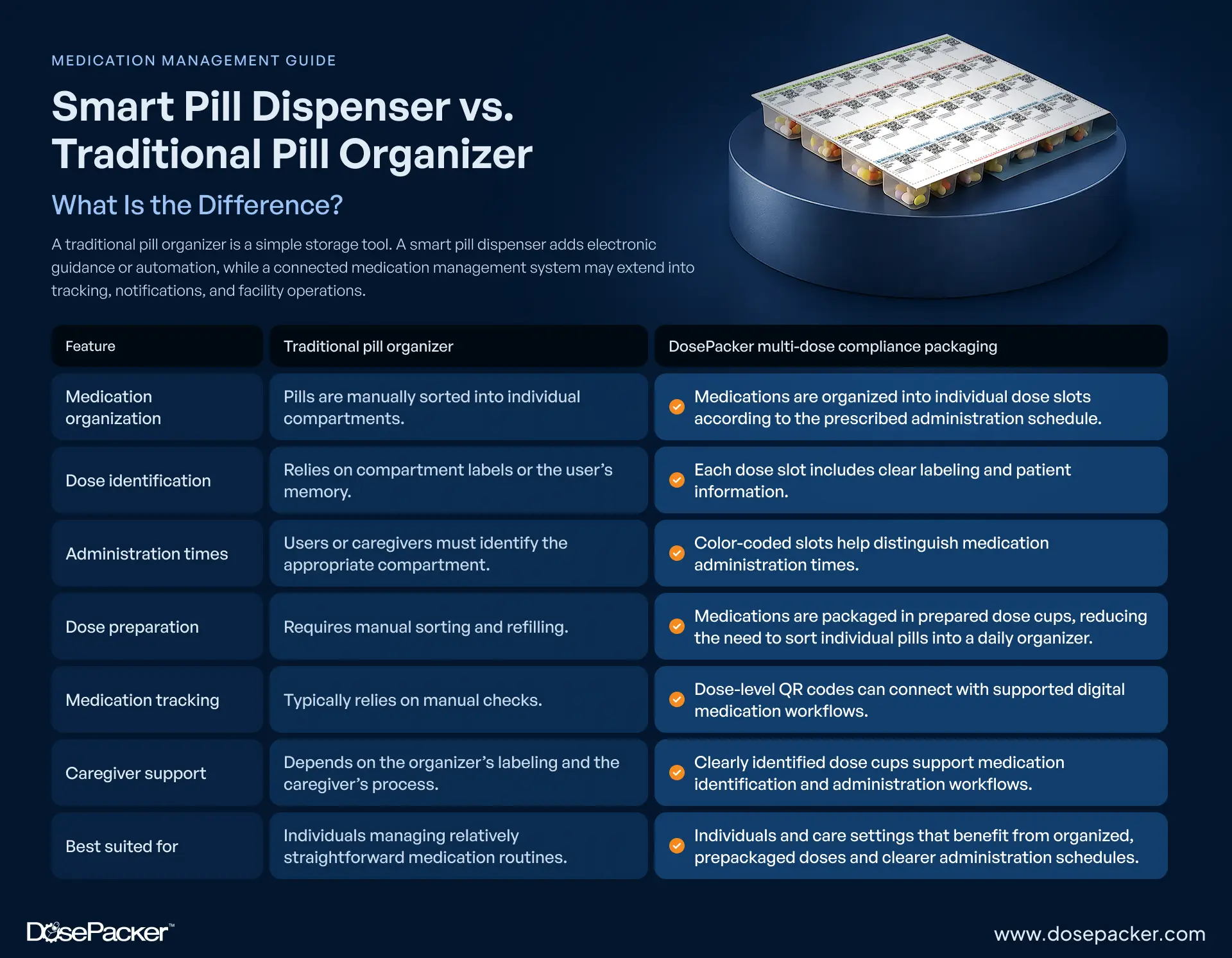
The nine options illustrate an important distinction: medication management includes more than the device that holds or releases a dose.
In a long-term care environment, staff must organize medications, identify the correct resident's pack, follow the administration schedule, and document the outcome. A system that connects these tasks may be more relevant than a standalone dispenser with a long list of features.
DosePacker's approach combines medication packaging and storage with connected guidance and tracking. DosePack organizes medication by administration time, while DoseMinder provides visual cues and medication-related monitoring. DosePacker Storage helps staff locate resident packs, and CareCommunityOS supports the wider care management workflow.
Facilities evaluating these products can explore medication storage solutions to understand how secure storage and pack retrieval fit into the broader workflow.
For teams using DosePacker Storage, the focus is on identifying and retrieving the correct DosePack more efficiently. This matters especially when medication supplies must be organized across residents and replenished over time.
The same principle applies to medication reminder and tracking solutions. Reminders can prompt action, while tracking and connected oversight can give caregivers additional information about medication-related activity.
DosePacker is not simply a substitute for every automated dispenser on this list. It's most relevant for care communities evaluating a connected medication management workflow, not an individual consumer device alone.
For care teams starting their morning rounds, a smart pill dispenser's value depends on how well it supports their daily work.
A device may offer useful reminders or automated dispensing, but long-term care facilities also need dependable processes for identifying medications, organizing resident packs, document administration, and responding to exceptions.
This guide offers nine options with different approaches. For facilities seeking a broader approach, DosePacker brings together compliance packaging, medication storage, guided administration, and digital oversight.
Before deciding, assess residents' and staff needs, compare each product's capabilities, and confirm the selected system fits the facility's medication protocols.
Looking to improve medication management in your care community?
Disclaimer: This article is for informational purposes only and is not medical advice or an endorsement of clinical effectiveness. Product features and availability may change. Verify current specifications with each manufacturer. Select and use medication devices according to clinical guidance and the facility's medication administration policies.
